Brazilian Amazon Reserve Faces Critical Forest Loss Despite Conservation Efforts
A critical Amazon rainforest reserve is experiencing unprecedented forest loss, driven by cattle ranching and agricultural expansion. Researchers are calling for comprehensive management strategies to preserve this vital ecological region.
Deep in the heart of Brazil's cattle country, a critical Amazon rainforest protection area is losing ground at an alarming rate, revealing the complex challenges of environmental conservation.
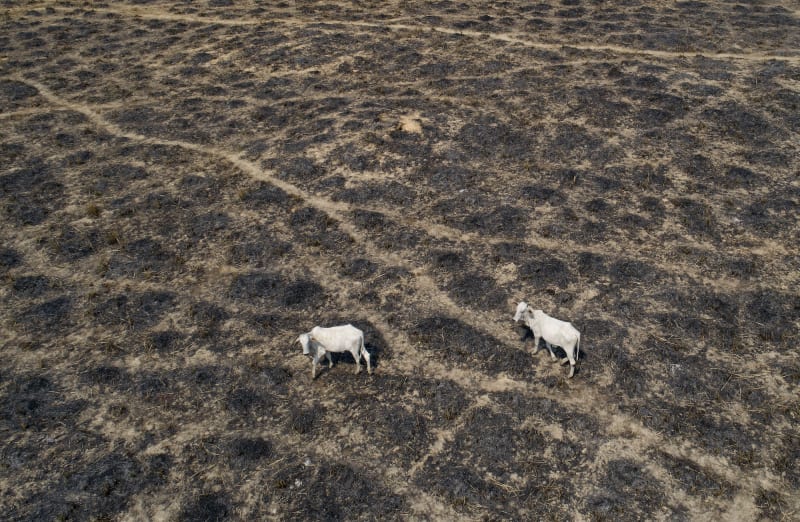
The Triunfo do Xingu Environmental Protection Area, spanning an impressive 1.7 million hectares - roughly half the size of Belgium - has witnessed devastating forest loss, with satellite data from the University of Maryland's Global Land Analysis and Discovery (GLAD) lab painting a stark picture of ecological decline. Preliminary data shows that forest loss in 2024 skyrocketed 400% compared to the previous year, with continued deforestation observed in 2025, primarily concentrated in the reserve's northern regions where the largest forest tracts remain.
At the center of this environmental challenge is Brazil's booming cattle industry, where cows dramatically outnumber humans 38 to one. Ranchers routinely clear forest through slash-and-burn techniques, creating pastureland that expands rapidly and often unpredictably. Local state officials, speaking anonymously, have described how fires set for land clearance can quickly spread beyond controlled boundaries, consuming not just forests but also neighboring crops and homes.
A comprehensive study published in the Brazilian journal Geografia Ensino & Pesquisa revealed the staggering scale of transformation, documenting a 1,468% increase in pastureland between 2001 and 2022. Researchers identified three distinct periods of forest loss: an initial high-rate period from 2002 to 2007, a brief reduction after the area's protected status was established, and a resumed high-rate period beginning in 2013.
Despite being designated as an environmental protection area in 2006, Triunfo do Xingu has lost approximately half of its primary forest cover. Landowners are legally permitted to clear up to 20% of their land, but local officials suggest that virtually no farms are maintaining the required 80% forest preservation.
The research team urgently recommends that the Pará state government develop a comprehensive management plan to guide land use, monitor environmental compliance, and establish strategic partnerships across various sectors. Their goal is to preserve and restore the reserve's rapidly diminishing forest ecosystem, recognizing the critical importance of this region in the broader Amazon conservation landscape.
As Brazil continues to balance agricultural development with environmental preservation, the story of Triunfo do Xingu serves as a poignant reminder of the ongoing challenges in protecting one of the world's most vital ecological regions. The future of this remarkable landscape depends on innovative, collaborative approaches that can reconcile economic needs with environmental sustainability.
Based on reporting by Mongabay
This story was written by BrightWire based on verified news reports.
More Good News
 🌍 Planet
Nepal Transforms Mount Everest Waste Management Strategy to Protect World's Highest Peak
 🌍 Planet
Amazonian Fishers Turn Environmental Detectives in Groundbreaking River Study
 🌍 Planet