Medieval Women's Cemetery Reveals Surprising Secrets of Early Religious Life
Archaeologists uncover a mysterious medieval women's cemetery in Wales, revealing a potential early religious community with intricate artifacts and complex social structures. The site challenges previous understanding of women's roles in 6th-century society.
In the quiet grounds of Fonmon Castle near Cardiff, Wales, archaeologists are unraveling a fascinating mystery about a 6th-century burial site that challenges everything we thought we knew about medieval women's communities.
Over four years of meticulous excavation, researchers have uncovered 58 skeletons in a cemetery where nearly all the remains are female - a discovery that hints at a remarkable, previously unknown religious settlement. Dr. Andy Seaman from Cardiff University is leading the investigation, which has already yielded extraordinary insights into this hidden world.
The most recent dig has produced a tantalizing clue: the outline of what appears to be a small building, potentially a shrine or chapel, located centrally within the cemetery. Graves are clustered tightly around this feature, suggesting it held profound spiritual significance for the community. Archaeologist Tudur Davies notes that some burial sites contain multiple individuals, indicating a unique approach to commemorating the deceased.
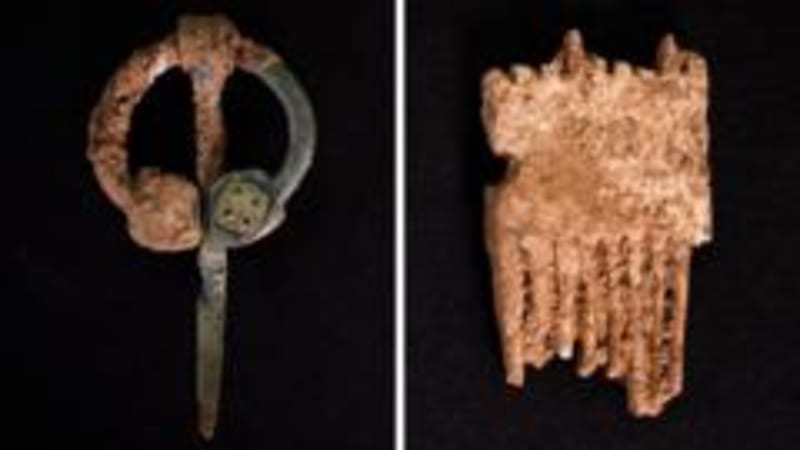
Remarkable artifacts are painting a vivid picture of these women's lives. Conservator Clare Emerson is carefully restoring intricate objects like a potentially gilded copper brooch with green enamel, delicate bone pins, antler combs, and exquisite 3mm multicolored glass beads. Domestic items including quern stones for bread-making and pottery further reveal a complex, self-sufficient community.
While most burials demonstrate careful treatment, two mysterious exceptions stand out: two women were unceremoniously discarded in a ditch, with one reportedly having her hands and feet bound. This anomaly has sparked intense speculation about social dynamics and potential punishment practices in this early religious settlement.
The team believes they may be witnessing an unprecedented glimpse into early Christian organization, exploring a historical period where written records are frustratingly sparse. By carefully analyzing skeletal remains, artifacts, and burial patterns, these researchers are slowly reconstructing a forgotten chapter of medieval women's spiritual and communal life.
Questions remain tantalizingly unanswered: Who were the few men and children also buried here? What was the precise nature of this enclosed community? How did they interact with the broader society of 6th-century Wales? As Dr. Seaman emphasizes, 'It's a period where the history is not yet written,' making each discovery a thrilling step toward understanding our complex human past.
Based on reporting by BBC News
This story was written by BrightWire based on verified news reports.
Spread the positivity! 🌟
Share this good news with someone who needs it
More Good News
 🚀 Innovation
4,500-Year-Old Sun Temple Emerges from Nile's Sands, Revealing Ancient Egyptian Worship
 🚀 Innovation
600 Hidden Homes Reveal Lost Bronze Age City in Irish Mountains
🚀 Innovation