Welsh Cemetery Reveals Stunning Secrets of Medieval Women's Community
Archaeological excavations in Wales reveal a mysterious medieval women's community with sophisticated cultural practices. Researchers uncover 58 skeletons and remarkable artifacts that challenge our understanding of early religious societies.
Archaeologists have uncovered a mesmerizing medieval mystery in Wales, where a cemetery near Cardiff airport is revealing extraordinary details about an early female religious society from the 6th or 7th century.
Over four years of careful excavation, researchers from Cardiff University have unearthed 58 skeletons - predominantly female - buried in shallow limestone graves, each holding tantalizing clues about life during this enigmatic historical period. Dr. Andy Seaman, leading the archaeological dig, believes they may have discovered an enclosed religious community that lived separately from broader society.
The most intriguing discovery is a potential small building or shrine located centrally in the cemetery, with graves deliberately clustered around it. Some burial sites contain multiple individuals, suggesting a unique cultural practice where previous remains were carefully moved to accommodate new burials. This suggests a deeply structured and meaningful approach to memorializing community members.
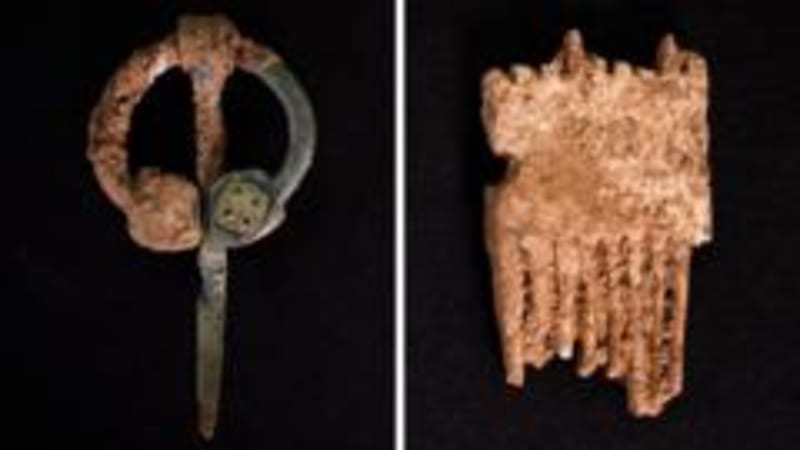
Exquisite artifacts found alongside the remains paint a complex picture of these women's lives. Conservator Clare Emerson has been meticulously cleaning remarkable objects including an ornate copper brooch potentially gilded with gold, green enamel-tipped ends, a bone pin with intricate patterns, and an antler comb carved with remarkable detail. Multicolored glass beads, each just 3mm wide, hint at sophisticated clothing and jewelry traditions.
Domestic items like quern stones for grinding flour, pottery, and glassware further suggest this was a vibrant, living community with sophisticated daily practices. While most burials showed careful treatment, two women were mysteriously discarded in a ditch - one with bound hands and feet - raising provocative questions about social dynamics and potential punishment rituals.
The research team continues investigating this extraordinary site, hoping to illuminate an under-documented period of early Christianity. As Dr. Seaman notes, this is a historical era where 'history is not yet written,' making each discovery a crucial piece in understanding medieval social structures, religious practices, and community life.
With male and child remains also present, researchers are piecing together a fascinating narrative of interconnected lives in this secluded medieval settlement. Their work promises to reshape our understanding of women's roles and community organization during this transformative historical period.
Based on reporting by BBC Science
This story was written by BrightWire based on verified news reports.
Spread the positivity! 🌟
Share this good news with someone who needs it
More Good News
🚀 InnovationMedieval Women's Cemetery Reveals Surprising Secrets of Early Religious Life
🚀 InnovationAncient Welsh Cemetery Reveals Extraordinary Female Religious Community
 🚀 Innovation