4,500-Year-Old Sun Temple Emerges from Nile's Sands, Revealing Ancient Egyptian Worship
Archaeologists uncover a rare 4,500-year-old sun temple in Egypt, revealing unprecedented insights into ancient religious practices. This milestone discovery promises to transform our understanding of Fifth Dynasty worship and architectural techniques.
In a groundbreaking archaeological discovery, researchers have unearthed a remarkable sun temple dating back 4,500 years, offering unprecedented insights into ancient Egyptian religious practices.
An Italian-Egyptian archaeological mission has successfully excavated a temple dedicated to sun worship in the Abusir necropolis, near Abu Ghurab, which has remained hidden beneath Nile river silt for millennia. This extraordinary find represents only one of two definitively identified sun temples from Egypt's Old Kingdom period, specifically from the reign of King Nyuserre, the sixth ruler of the Fifth Dynasty.
Archaeologists Massimiliano Nuzzolo and Rossana Perilli from the universities of Turin and Naples meticulously revealed approximately half of the temple's total layout, spanning an impressive 1,000 square meters. Mohamed Ismail Khaled, Secretary-General of the Supreme Council of Antiquities, described the discovery as a significant 'milestone' in understanding Egypt's Fifth Dynasty archaeological landscape.
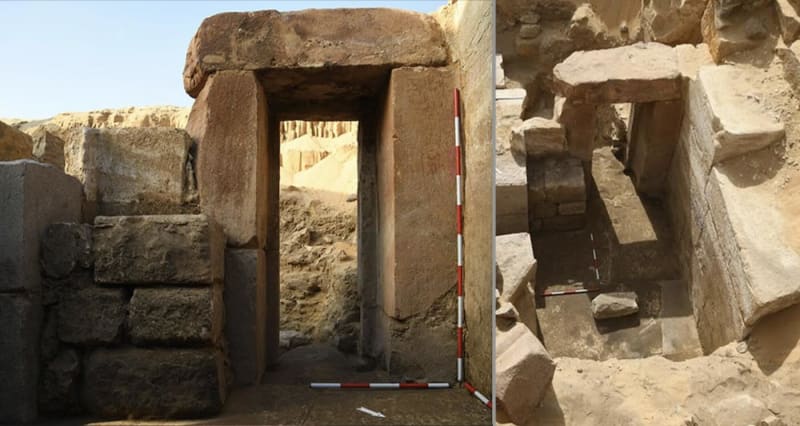
The site's history stretches back to 1901 when German Egyptologist Ludwig Borchardt first noted the temple's presence, though groundwater complications previously prevented extensive exploration. Now, the team has uncovered the original entrance buried under three feet of Nile silt, revealing limestone pillar bases, granite doorframes, and the temple's original floor.
Intriguing architectural details emerged, including a sloping ramp potentially connecting to the Nile and an internal staircase leading to the roof. Early evidence suggests the temple extends northward, consistent with Fifth Dynasty royal complex designs. Artifacts discovered within the site, such as a Senet board game and pottery from multiple periods, provide fascinating glimpses into the temple's evolving functions – from religious sanctuary to eventual dwelling during the Intermediate Period.
The archaeological team plans to continue excavations in upcoming seasons, aiming to unravel the temple's precise religious significance and shed light on this extraordinary chapter of ancient Egyptian civilization.
Based on reporting by GNN Science
This story was written by BrightWire based on verified news reports.
Spread the positivity! 🌟
Share this good news with someone who needs it
More Good News
 🚀 Innovation
600 Hidden Homes Reveal Lost Bronze Age City in Irish Mountains
 🚀 Innovation
Medieval Women's Cemetery Reveals Surprising Secrets of Early Religious Life
🚀 Innovation