Killer Whales: Masters of Adaptation - How Orcas Are Revealing Remarkable Social Intelligence
Orcas are revealing unprecedented hunting strategies and social learning capabilities that challenge our understanding of animal intelligence. Marine researchers are documenting extraordinary behaviors that showcase these marine mammals' remarkable cognitive adaptability.
In a stunning display of marine prowess, orcas are demonstrating behaviors that are captivating scientists and challenging our understanding of animal intelligence. Marine researchers have documented extraordinary incidents where these apex predators are executing complex hunting strategies that reveal profound social learning capabilities.
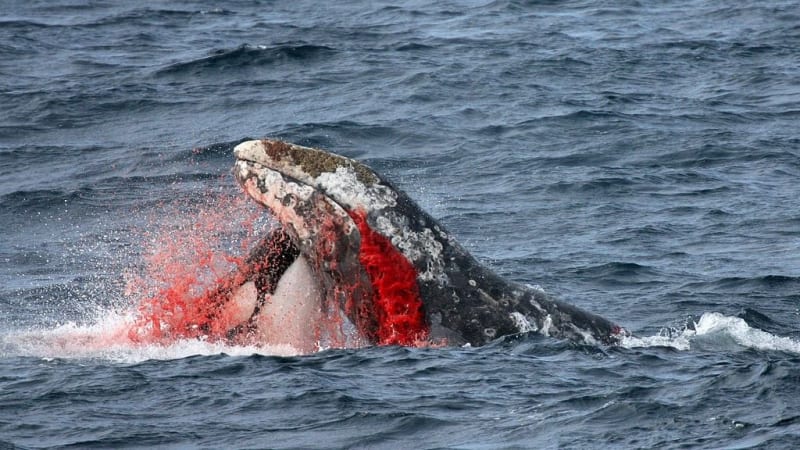
In March 2019, a groundbreaking moment occurred off the southwestern Australian coast when researchers witnessed a dozen orcas systematically hunting and killing an adult blue whale - the first-ever documented case of such predation. The orcas methodically devoured massive chunks of flesh from the whale's flanks, with the massive creature succumbing approximately an hour after the coordinated attack.
Recent observations have revealed even more remarkable behaviors. Orcas have been spotted abducting baby pilot whales, surgically extracting shark livers, and even deliberately ramming and sinking boats near the coasts of Spain and Portugal. These actions have prompted marine biologists to ask a compelling question: Are orcas becoming more intelligent?
According to Deborah Giles, an orca researcher at the University of Washington, these marine mammals possess extraordinarily complex brains with emotional and memory centers more developed than human brains. While anatomical brain changes are unlikely in the short term, orcas demonstrate remarkable social learning, quickly teaching each other sophisticated hunting and survival techniques.
Josh McInnes, a marine ecologist at the University of British Columbia, explains that behavioral changes can influence anatomical evolution, but this process occurs over thousands of years. What's more fascinating is how orcas rapidly adapt to changing environments through social transmission of knowledge. Their interactions with human activities like boat traffic and fishing potentially accelerate their learning and behavioral modifications.
Marine ecologist Robert Pitman from Oregon State University's Marine Mammal Institute highlights that orca hunting strategies, like taking down blue whales, require immense cooperation and coordination. These skills may have developed in response to whale population recoveries, with dominant females teaching intricate hunting techniques to younger pod members. Interestingly, some behaviors previously thought to be novel - such as inserting their heads into whale mouths to consume tongues - might actually be long-standing practices only recently observed by humans.
The implications of these discoveries are profound. Far from being simple predators, orcas emerge as sophisticated social learners with complex cultural transmission systems. Their ability to adapt, learn, and strategically hunt suggests a level of intelligence that demands our respect and continued scientific exploration. As our understanding of these magnificent creatures grows, so too does our appreciation for the intricate social dynamics of marine life.
Based on reporting by Live Science
This story was written by BrightWire based on verified news reports.
More Good News
 🌍 Planet
Arctic Fossil Discovery Rewrites Earth's Recovery Story: Marine Life Bounced Back Faster Than Ever Imagined
 🌍 Planet
Mediterranean's Great White Sharks on Brink of Extinction, Researchers Warn
 🌍 Planet