Hidden Ocean Wonders: Scientists Unveil 20 New Species in Pacific's Twilight Zone
Scientists explore Guam's deep-sea 'twilight zone' and discover 20 potentially new marine species using innovative underwater monitoring devices. The groundbreaking expedition reveals an extraordinary ecosystem hidden from human eyes for millennia.
In the shadowy depths off Guam's coastline, a world of incredible marine mystery has been quietly waiting to be discovered. Marine researchers from the California Academy of Sciences have just revealed an extraordinary collection of never-before-seen marine life, pulled from the ocean's mysterious twilight zone between 55 and 100 meters deep.
Expedition leader Luiz Rocha, a lifelong explorer driven by childhood dreams of scientific discovery, led a remarkable mission to retrieve specialized monitoring devices called ARMS (Autonomous Reef Monitoring Structures) that had been gathering marine life data for eight years. These ingenious 'underwater hotels' - stacks of PVC plates designed to attract sea creatures - became a treasure trove of biodiversity, yielding 2,000 specimens and revealing approximately 100 previously unrecorded species, with at least 20 potentially entirely new to scientific understanding.
The retrieval process was as dramatic as the discoveries themselves. Rocha and fellow diver Mauritius Bell conducted an extremely technical dive using specialized rebreather equipment, descending over 100 meters into an environment where standard scuba diving becomes impossible. Their carefully planned expedition involved a rapid descent of less than 10 minutes, followed by a critical 15-minute exploration window, and then an intricate four-to-five-hour ascent to prevent dangerous decompression sickness.
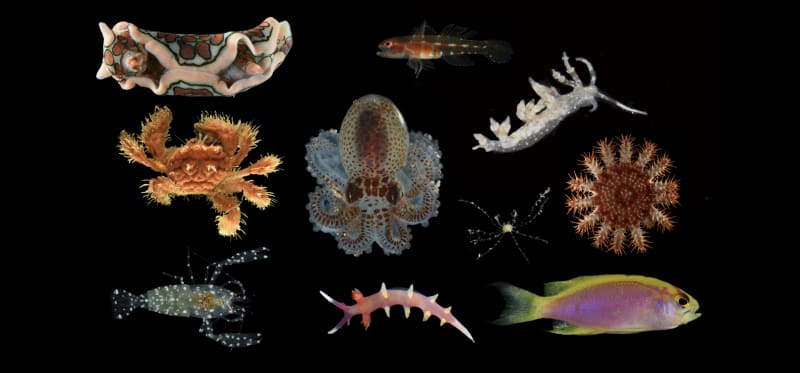
When the research team examined the ARMS plates, they were astounded by the marine life they discovered. A transparent goby fish with visible skeleton, a yellow polka-dotted sea slug, and an orange cardinalfish with bulging eyes represented just a fraction of their incredible finds. Potential new species included a unique sea slug from the Marionia genus featuring distinctive yellow spots and branch-like back growths, and a baby octopus adorned with polka dots.
Robert Lasley Jr., curator of crustacea at the University of Guam, emphasized the significance of this groundbreaking research. 'This approach captures a remarkable diversity of marine life that cannot be obtained any other way,' he noted. The team's two-week processing of ARMS plates generated more data and species records than ever previously documented in Guam's deeper marine environments.
Rocha himself was jubilant about the expedition's success, stating to National Geographic that nothing compares to the explorer's thrill of discovering completely unknown species. While genetic analysis is still ongoing, scientists anticipate the number of newly identified species could increase tenfold once DNA testing is complete. This remarkable project not only expands our understanding of marine biodiversity but also highlights the incredible, largely unexplored ecosystems existing in our planet's oceanic depths.
The miniature marine inhabitants - some smaller than thumbtacks and seeing sunlight for the first time - represent a testament to the incredible resilience and diversity of life on our planet. Their discovery serves as a powerful reminder that even in the most challenging environments, nature continues to surprise, innovate, and thrive in ways we are only beginning to comprehend.
Based on reporting by Mongabay
This story was written by BrightWire based on verified news reports.
Spread the positivity! 🌟
Share this good news with someone who needs it
More Good News
 🚀 Innovation
Cosmic Collision: NASA Telescopes Unveil Spectacular Galactic Merger
 🚀 Innovation
Myanmar Earthquake Reveals Surprising Scientific Insights About Earth's Powerful Fault Lines
 🚀 Innovation