Cosmic Collision: NASA Telescopes Unveil Spectacular Galactic Merger
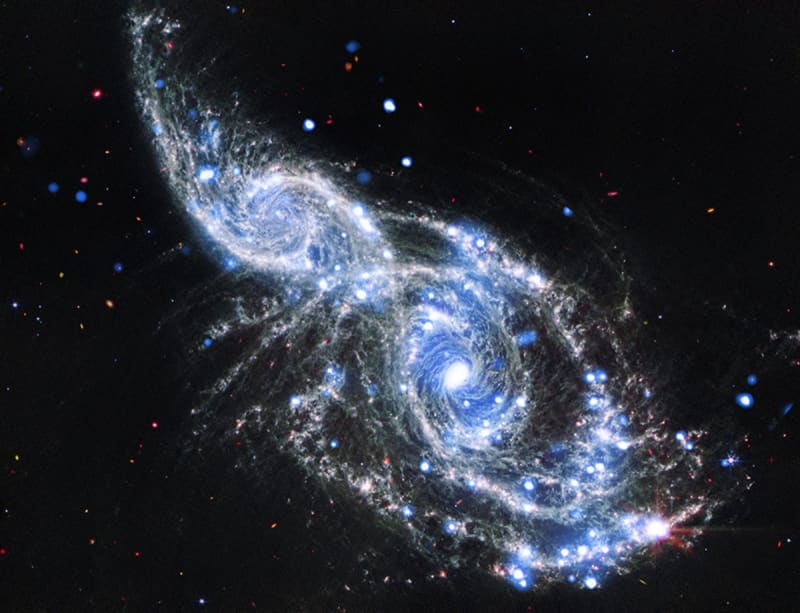
NASA's JWST and Chandra X-ray Observatory have captured a mesmerizing image of two colliding spiral galaxies 120 million light-years away. The composite reveals intricate details of galactic interaction, showcasing how massive celestial bodies transform over billions of years.
In a breathtaking astronomical revelation, NASA's most advanced space telescopes have captured an extraordinary cosmic dance millions of light-years from Earth, revealing the intricate details of two spiral galaxies locked in a slow, gravitational embrace.
Scientists have combined observations from the James Webb Space Telescope (JWST) and the Chandra X-ray Observatory to create a stunning composite image of galaxies IC 2163 and NGC 2207, located approximately 120 million light-years away from our planet. This remarkable image provides an unprecedented glimpse into the complex processes of galactic interaction, showcasing how massive celestial bodies interact and transform over billions of years.
The composite image reveals fascinating details about these interacting galaxies. JWST's mid-infrared data illuminates dust and cooler matter in soft white, gray, and red tones, while Chandra's X-ray observations highlight high-energy regions, including zones of intense star formation, in vivid blue. The larger galaxy, NGC 2207, is gradually stretching and stripping material from its smaller companion, a process that will ultimately result in a complete merger millions of years in the future.
Astronomers are particularly excited about this observation because galactic collisions can trigger massive bursts of star formation. By studying these cosmic interactions, researchers gain critical insights into how galaxies evolve, transform, and develop over immense spans of time. The unique capabilities of both JWST and Chandra allow scientists to see these complex processes with unprecedented clarity and detail.
This groundbreaking image represents more than just a beautiful astronomical photograph—it's a window into the dynamic, ever-changing nature of our universe. By combining data from telescopes with different observational capabilities, researchers can create multi-dimensional views of cosmic phenomena that reveal layers of complexity invisible to single-instrument observations.
The stunning visualization serves as a powerful reminder of the incredible technological achievements in modern astronomy, demonstrating how sophisticated space telescopes can work in concert to unlock the mysteries of our vast and intricate cosmos. As our observational technologies continue to advance, we can expect even more remarkable insights into the fundamental processes that shape our universe.
Based on reporting by Scientific American
This story was written by BrightWire based on verified news reports.
More Good News
 🚀 Innovation
2025's Sky Spectacles: A Year of Celestial Wonder Unveiled
 🚀 Innovation
Cosmic Canvas: Dwarf Galaxy Reveals Universe's Hidden Artistry
 🚀 Innovation