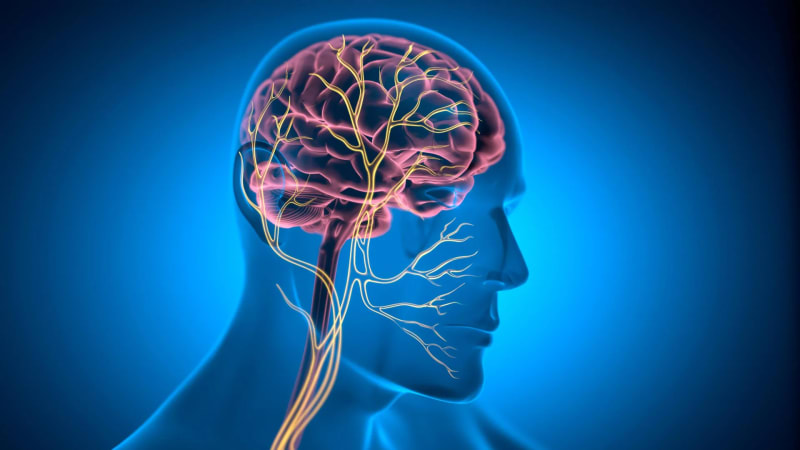
Tiny Nerve Could Be the Secret to Keeping Hearts Young and Healthy
Groundbreaking research reveals how the vagus nerve plays a crucial role in heart aging and regeneration. Scientists discover innovative bioengineering techniques that could revolutionize cardiac care.
A breakthrough medical discovery is offering new hope for heart health, revealing that a tiny nerve might hold the key to maintaining cardiac youth and vitality.
Researchers from the Sant'Anna School of Advanced Studies in Pisa have uncovered fascinating insights about the vagus nerve's critical role in heart aging, publishing their groundbreaking findings in Science Translational Medicine. The study demonstrates that maintaining nerve connections to the heart can dramatically slow the aging process, with the right cardiac vagus nerve emerging as a particularly important factor in preserving heart muscle cells.
Professor Vincenzo Lionetti, leading the Translational Critical Care Unit, explains the profound implications: "When the integrity of the connection to the vagus nerve is lost, the heart ages more rapidly." This revelation comes from an interdisciplinary research effort that combined experimental medicine with advanced cardiovascular bioengineering techniques.
The international research team included experts from multiple institutions, including the University of Pisa, Fondazione Toscana G. Monasterio, and even international collaborators like Al-Farabi Kazakh National University and the Leibniz Institute on Ageing. Funded by the European FET program's NeuHeart project, the study represents a significant leap forward in understanding heart health.
A key innovation emerged from the Biorobotics Institute, where researchers developed a bioabsorbable nerve conduit designed to support vagus nerve regeneration. Eugenio Redolfi Riva, co-author of the neuroprosthesis patent, highlighted the groundbreaking nature of this technology.
Cardiologist Anar Dushpanova provided additional insight, noting that "even partial restoration of the connection between the right vagus nerve and the heart is sufficient to counteract remodeling mechanisms and preserve cardiac contractility." This finding suggests that complete nerve recovery isn't necessary to achieve significant health benefits.
The research has potentially transformative implications for cardiothoracic and transplant surgery. Professor Lionetti concluded that these results could shift the clinical paradigm "from managing late complications associated with premature cardiac aging to their prevention," offering a proactive approach to heart health that could benefit millions worldwide.
As medical science continues to unlock the mysteries of human physiology, this research stands as a testament to the power of interdisciplinary collaboration and innovative thinking in addressing complex health challenges.
Based on reporting by Science Daily Health
This story was written by BrightWire based on verified news reports.
Spread the positivity! 🌟
Share this good news with someone who needs it
More Good News
 🚀 Innovation
The Cosmic Mystery: Why Does Gravity Only Pull, Never Push?
 🚀 Innovation
TECNO Transforms AFCON Fan Experience with Cutting-Edge AI Technology
 🚀 Innovation