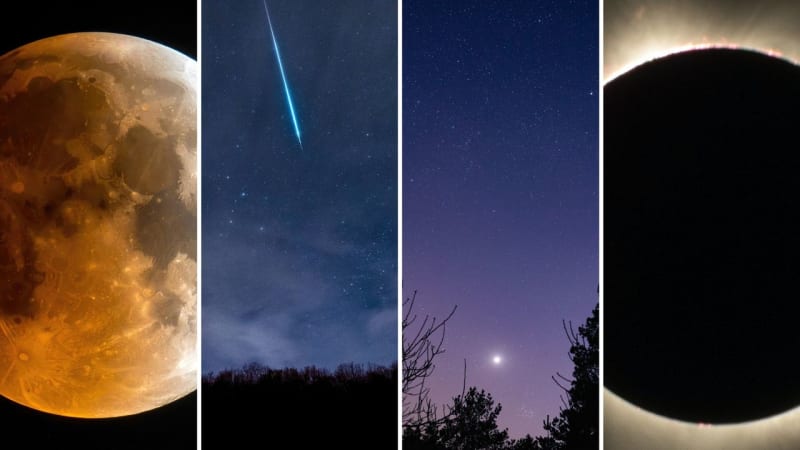
Stargazers' Delight: 15 Breathtaking Sky Spectacles Coming in 2026
Get ready for an astronomical adventure with total eclipses, meteor showers, and planetary alignments that will transform the night sky. From Europe to the Pacific, these celestial events promise unforgettable moments for sky enthusiasts.
Astronomy lovers, mark your calendars! The year 2026 is set to deliver an extraordinary lineup of celestial performances that will captivate skywatchers around the globe. Whether you're an experienced astronomer or a casual stargazer, these upcoming sky events promise to transform ordinary nights into extraordinary experiences.
The year kicks off with Jupiter taking center stage in early January, reaching its opposition phase where the gas giant will be at its brightest and most observable. Rising in the eastern sky at sunset and setting in the west at sunrise, Jupiter will offer an unparalleled viewing opportunity that occurs just once every 13 months.
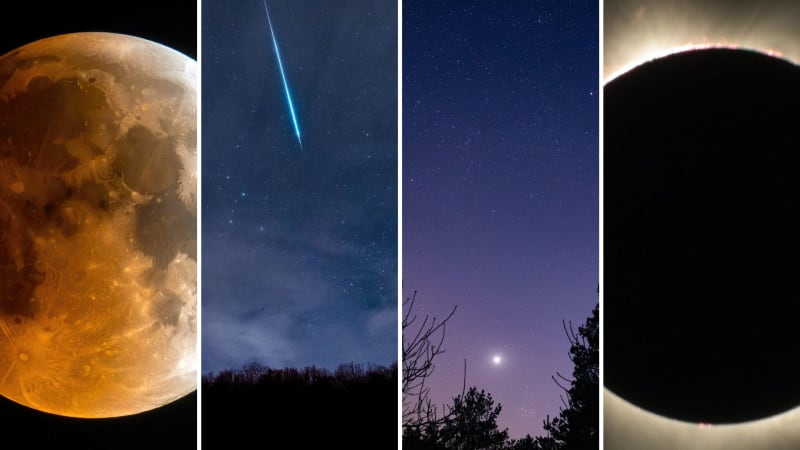
March brings the first and only total lunar eclipse of 2026, transforming the full Worm Moon into a spectacular reddish-orange 'blood moon' for an impressive 58 minutes. Visible across western North America, Australia, New Zealand, East Asia, and the Pacific, this celestial event will be the last total lunar eclipse until a special occurrence on New Year's Eve 2028-2029.
Spring will light up with the Eta Aquarid meteor shower, producing up to 50 meteors per hour. Created by debris from Halley's Comet, this meteor display will be particularly stunning from the Southern Hemisphere, with early evening offering the best viewing conditions.
One of the year's most anticipated events arrives in June when Venus and Jupiter will shine together in the western sky, approaching within 1.5 degrees of each other. As a bonus, Mercury will make a rare appearance below these two luminous planets, creating a celestial trio that will mesmerize sky watchers.
The absolute pinnacle of 2026's astronomical events will be the total solar eclipse on August 12th. Visible from eastern Greenland, western Iceland, and northern Spain, this will be the first total solar eclipse in mainland Europe since 1999. Maximum totality of 2 minutes and 18 seconds will occur off Iceland's coast, with partial eclipse visibility extending to parts of Europe, northwestern Africa, Canada, Alaska, and the northeastern United States.
The Perseid meteor shower will provide a spectacular finale to the summer, with 60 to 120 meteors expected to radiate from the constellation Perseus. Uniquely, the peak night of August 12-13 will occur just hours after the total solar eclipse, offering eclipse chasers in Spain an extraordinary opportunity to witness two remarkable astronomical events in a single day.
Whether you're equipped with just your naked eyes or a sophisticated telescope, these 2026 sky events promise to deliver moments of wonder, connection, and cosmic beauty that will inspire and amaze sky enthusiasts worldwide.
Based on reporting by Space.com
This story was written by BrightWire based on verified news reports.
Spread the positivity! 🌟
Share this good news with someone who needs it
More Good News
 🚀 Innovation
January's Wolf Supermoon: A Celestial Spectacle Illuminating Winter Skies
 🚀 Innovation
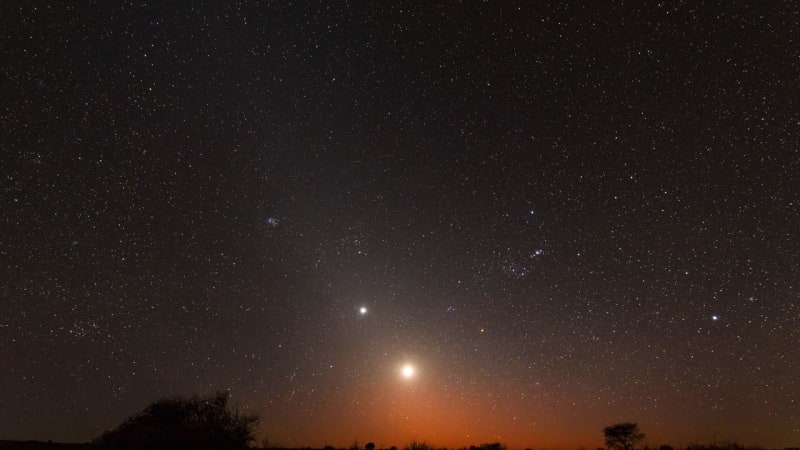
Celestial Spectacle: A Stargazer's Guide to Planetary Displays in 2026
 🚀 Innovation