Scientists Map Mars' Ancient Rivers, Revealing Promising Sites for Past Life
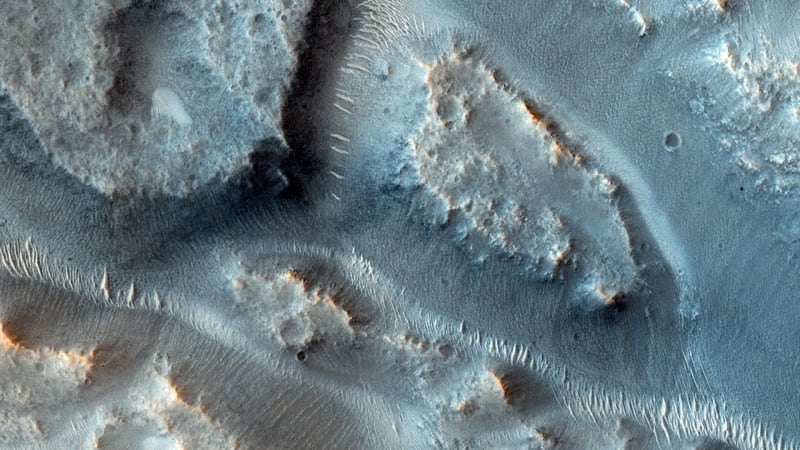
Scientists map Mars' ancient river systems, revealing 16 promising locations where life might have existed billions of years ago. This groundbreaking research provides unprecedented insights into the red planet's potential for supporting extraterrestrial life.
In a groundbreaking exploration of Mars' geological history, researchers have uncovered a fascinating map of the red planet's ancient river systems, potentially revealing where extraterrestrial life might have once thrived.
Scientists from The University of Texas at Austin have completed the first comprehensive study of Martian drainage basins, identifying 16 extensive river networks that could hold critical clues about the planet's potential to support life billions of years ago.
Led by Timothy A. Goudge and postdoctoral researcher Abdallah S. Zaki, the team meticulously assembled data from previous studies, tracing how individual river features connected across the Martian landscape. Their research, published in PNAS, represents the first systematic, planet-wide effort to map large river basins on another world.
The study reveals a surprising insight: though Mars today appears cold and barren, it once hosted complex river systems where water flowed through valleys, overran crater rims, and potentially fed into a vast ancient ocean. These river networks, while smaller than Earth's, played a crucial role in shaping the planet's terrain, accounting for approximately 42% of all material eroded by rivers despite covering only 5% of the ancient landscape.
Comparing Mars to Earth provides fascinating perspective. While our planet boasts 91 drainage basins exceeding 100,000 square kilometers, Mars has just 16 similar systems. The Amazon River basin, spanning roughly 6.2 million square kilometers, dwarfs Martian equivalents, yet these smaller networks remain scientifically profound.
The researchers emphasize that these river systems represent prime targets in the search for potential signs of ancient life. As Zaki explained, "The longer the distance water travels, the more it interacts with rocks, increasing the chances of chemical reactions that could translate into signs of life." Unlike Earth, Mars lacks active tectonic forces that typically reshape landscapes, making these preserved river systems even more scientifically valuable.
This breakthrough offers exciting possibilities for future Mars exploration, providing planetary scientists with precise locations to investigate potential biosignatures. By understanding how water once flowed across Mars, researchers inch closer to answering one of humanity's most profound questions: Were we ever alone in the universe?
Based on reporting by Science Daily Tech
This story was written by BrightWire based on verified news reports.
Spread the positivity! 🌟
Share this good news with someone who needs it
More Good News
 🚀 Innovation
5 Breakthrough Innovations Transforming Outdoor Adventures in 2025
 🚀 Innovation
Scientists Unveil First Precisely Measured Rogue Planet Drifting Solo Through Space
 🚀 Innovation