Renault's Filante Record 2025: A Breakthrough in Electric Vehicle Efficiency
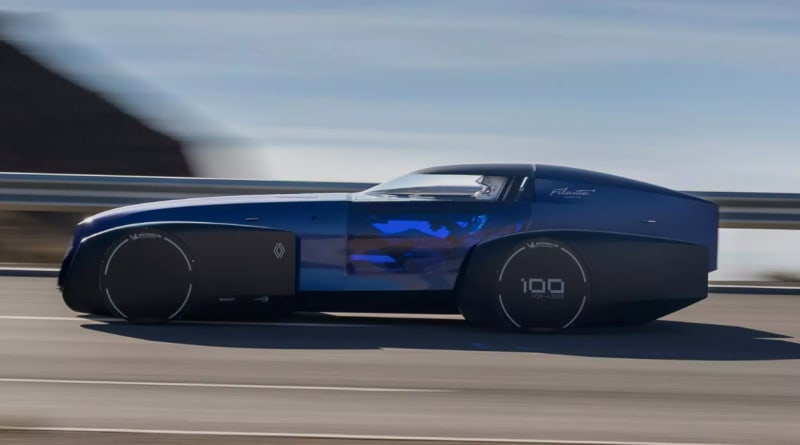
Renault's groundbreaking Filante Record 2025 experimental car represents a quantum leap in electric vehicle efficiency. By focusing on weight reduction and aerodynamic design, the project offers a glimpse into the future of sustainable mobility.
In the high-stakes world of automotive innovation, one company is reimagining how electric vehicles can push the boundaries of efficiency and design. Renault, with its storied racing heritage stretching back to 1977, has unveiled the Filante Record 2025 — an experimental electric car that represents far more than a nostalgic tribute, but a forward-thinking exploration of intelligent mobility.
The project draws inspiration from legendary automotive pioneers like Colin Chapman, who famously observed that "Adding power makes you faster on the straights. Subtracting weight makes you faster everywhere." This philosophy sits at the core of Renault's ambitious experimental vehicle, which aims to dramatically improve electric vehicle range through meticulous engineering and design.
At the heart of the Filante Record 2025 is a laser-focused commitment to efficiency. With today's battery technology providing energy equivalent to just three gallons of gasoline, every gram and aerodynamic curve matters profoundly. Renault's team, led by advanced design head Sandeep Bhambra, approached the project not as a speed challenge, but as a comprehensive research platform to understand how technical choices impact real-world energy consumption.
Collaborating closely with Ligier for vehicle construction and Michelin for ultra-low rolling resistance tires, the team implemented radical weight reduction strategies. Using carbon fiber, advanced composites, and optimized structural designs, they managed to keep the experimental car's total mass around 1,000 kg (2,204 lb) — a remarkable achievement that directly translates to extended driving range.
Wind tunnel testing proved crucial in refining the vehicle's aerodynamic profile. Initial sessions revealed excessive drag, prompting the team to meticulously re-engineer airflow dynamics. Aerodynamicist Jocelyn Merigeault and her colleagues redesigned wheel fairings, adjusted cockpit proportions, and carefully managed transitions between the central cell and wings to minimize resistance.
Renault's approach reflects a profound shift in automotive priorities. As the company notes, the fundamental question has transformed from "How fast can we go?" to "How far can we travel intelligently?" The Filante Record 2025 embodies this philosophy — not as a speed record attempt, but as a sophisticated learning tool that explores the future of electric mobility.
By drawing on their Formula One racing expertise and applying lessons from decades of high-performance engineering, Renault is demonstrating that the path to better electric vehicles isn't about raw power, but intelligent design. The Filante Record 2025 serves as a beacon, illuminating potential technological breakthroughs that could revolutionize how we think about electric transportation.
Based on reporting by CleanTechnica
This story was written by BrightWire based on verified news reports.