Chinese Muslim Entrepreneurs Find Promising Halal Gateway in Malaysia
A vibrant food festival in Kuala Lumpur showcases China's growing halal business potential. Muslim entrepreneurs are discovering new opportunities through Malaysia's robust certification standards.
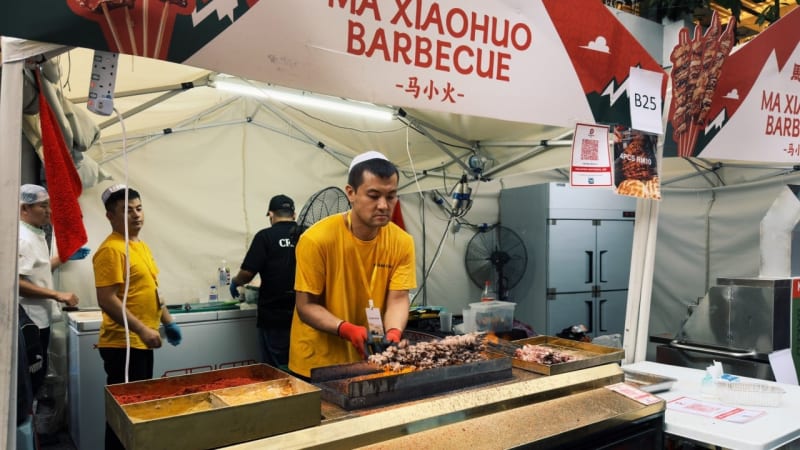
The sizzling aroma of grilled lamb and freshly pulled noodles fills the air at a bustling Kuala Lumpur mall, where China's Muslim entrepreneurs are transforming international food trade dynamics. An 11-day festival has become a crucial networking platform for vendors seeking to expand their halal food enterprises across Southeast Asia.
With approximately 60 vendors displaying an array of culinary delights, art, and handicrafts, the event represents more than just a marketplace—it's a bridge between cultures and commercial opportunities. Shoaib Ma, a Lanzhou-born food influencer and restaurant owner, explains the critical importance of this gathering for Chinese Muslim businesses.
"The halal industry is very big," Ma notes. "In China, we have the capacity for mass production, but the problem is trust." This sentiment captures the core challenge facing Chinese halal producers: establishing credibility in international markets.
China's Muslim population, estimated at 30 million, spans diverse regions including Xinjiang, Ningxia, Gansu, and Qinghai, as well as major cities like Xian. For many entrepreneurs, Malaysia represents an ideal gateway to broader halal markets due to its stringent certification standards and strategic geographic location.
Several festival participants have already successfully established restaurants, factories, and distribution networks in Malaysia, demonstrating the event's tangible economic impact. The cross-cultural exchange not only promotes business growth but also fosters mutual understanding between Chinese Muslim entrepreneurs and their Malaysian counterparts.
As global halal food markets continue expanding, events like this festival serve as crucial platforms for networking, knowledge sharing, and building international business relationships. The smoky aromas and vibrant displays tell a story of economic opportunity, cultural pride, and entrepreneurial spirit.
Based on reporting by South China Morning Post
This story was written by BrightWire based on verified news reports.