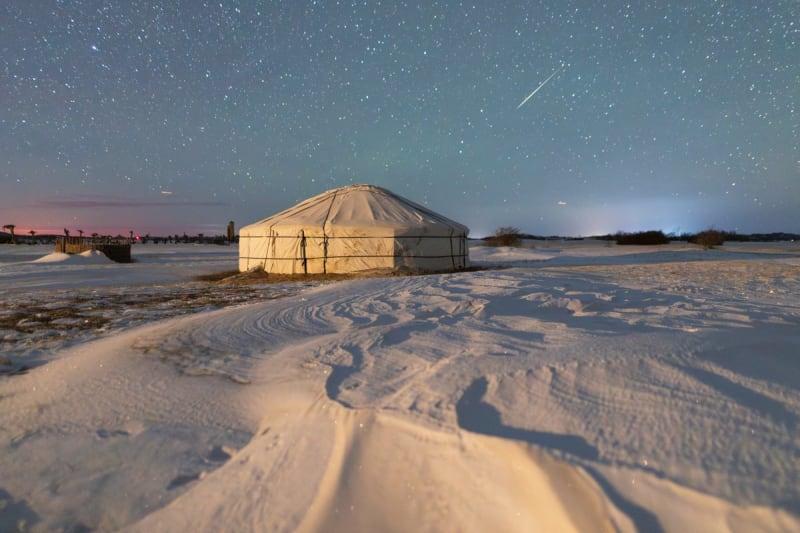
Quadrantid Meteor Shower: A Celestial Spectacle Lights Up January Skies
The 2026 Quadrantid meteor shower promises a spectacular display of fiery meteors originating from a unique asteroid. Northern Hemisphere viewers can catch this breathtaking celestial event during the early morning hours of January 4.
Space enthusiasts and stargazers, get ready for a breathtaking astronomical event that will illuminate the early January nights with fiery meteors streaking across the sky. The Quadrantid meteor shower promises to deliver a dazzling display of celestial fireworks, offering a mesmerizing start to the astronomical calendar of 2026.
The Quadrantids, an annual meteor shower running from November through early January, will reach its peak on the night of January 3 through the early hours of January 4. NASA recommends that Northern Hemisphere viewers aim to catch this spectacular show during the predawn hours of January 4, though a full moon rising the night before might slightly diminish visibility.
What makes these meteors truly unique is their origin. Unlike most meteor showers caused by comet debris, the Quadrantids are produced by asteroid 2003 EH1, which astronomers believe might actually be a dead comet. Some researchers even suggest a potential second contributor: the comet 96P/Machholz.
To maximize your viewing experience, astronomers recommend finding a dark location away from artificial light sources. Give your eyes approximately 30 minutes to adjust to the darkness, and focus your gaze toward the northern sky. The meteor shower's radiant point originates from the now-obsolete constellation Quadrans Muralis, first observed in 1825. Today, viewers can locate this point near the end of the Big Dipper's handle in the Ursa Major constellation.
The Quadrantids are renowned for their spectacular fireballs and bolides—large meteors that create dramatic explosions in the atmosphere, sometimes even raining meteorites onto Earth. These luminous displays offer sky watchers a rare opportunity to witness one of nature's most stunning celestial performances, transforming an ordinary winter night into an extraordinary astronomical experience.
For those passionate about understanding the night sky, the Quadrantid meteor shower represents more than just a visual spectacle. It's a fascinating glimpse into the complex dance of celestial objects, demonstrating how asteroids, comets, and Earth's atmosphere interact in a breathtaking cosmic ballet that has been unfolding for millions of years.
Whether you're an amateur astronomer or simply someone who appreciates the beauty of the natural world, the Quadrantid meteor shower offers a remarkable opportunity to connect with the universe's grandeur. So mark your calendars, prepare your blankets and warm drinks, and get ready to witness one of the year's most extraordinary celestial events.
Based on reporting by Scientific American
This story was written by BrightWire based on verified news reports.
Spread the positivity! 🌟
Share this good news with someone who needs it