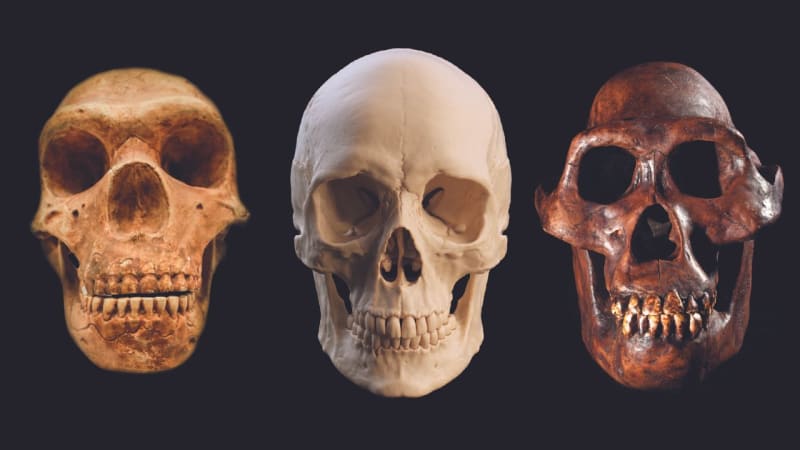
Neanderthals Reveal Stunning Intelligence: 10 Groundbreaking Discoveries in 2025
Groundbreaking research in 2025 reveals Neanderthals as sophisticated, intelligent ancestors with remarkable technological and cultural capabilities. These discoveries challenge previous assumptions and paint a complex picture of human evolution.
Once dismissed as primitive evolutionary cousins, Neanderthals are now emerging as sophisticated human ancestors with remarkable capabilities that challenge everything we thought we knew about early human intelligence.
In a landmark year for archaeological research, 2025 has unveiled extraordinary insights into Neanderthal life, technology, and cultural complexity that paint a dramatically different picture of these ancient humans. Scientists have uncovered evidence suggesting Neanderthals were far more advanced than previous generations of researchers ever imagined.
Perhaps the most revolutionary discovery came from Suffolk, England, where researchers found compelling evidence that Neanderthals were the first humans to deliberately create and control fire over 400,000 years ago. The archaeological site contained reddened clay, heat-shattered flint hand axes, and tiny pyrite flakes that produce sparks when struck against flint - a smoking gun indicating purposeful fire creation. While experts debate whether Neanderthals invented fire technology or learned it from even earlier ancestors like Homo erectus, the discovery definitively proves their technological sophistication and ability to survive harsh European climates.
Equally stunning were revelations about Neanderthal artistic and cultural practices. In a controversial finding, researchers identified what might be the world's oldest known fingerprint on a rock in Spain, potentially dating back 43,000 years. The potato-sized stone appears to have face-like features, with a red dot potentially representing a nose. This discovery could settle long-standing debates about Neanderthal symbolic thinking and artistic expression.
The year also brought disturbing insights into Neanderthal social dynamics. Research published in November revealed evidence of cannibalism within a Neanderthal group around 45,000 years ago. Six group members' remains were discovered in Belgium's Goyet cave system, bearing butchery marks similar to those found on animal bones. Some researchers speculate this might represent deliberate targeting of women and children by rival groups, potentially as a strategy to eliminate reproductive potential.
Creative expression took another fascinating turn with the discovery of what scientists are calling early 'crayons' in Crimea. Three pointed chunks of red and yellow ocher, dated to 100,000 years ago, showed signs of repeated sharpening. While some experts debate whether these were actual art tools or served another purpose, the find suggests Neanderthals engaged in culturally meaningful activities beyond mere survival.
These discoveries collectively transform our understanding of Neanderthals from primitive cave dwellers to complex, intelligent human relatives. Far from being an evolutionary dead end, they emerge as innovative, creative beings capable of sophisticated technological and cultural achievements that rival those of early Homo sapiens.
As research continues to chip away at old misconceptions, one thing becomes increasingly clear: Neanderthals were not just distant genetic cousins, but intricate, nuanced beings whose legacy is far more profound than we ever imagined.
Based on reporting by Live Science
This story was written by BrightWire based on verified news reports.