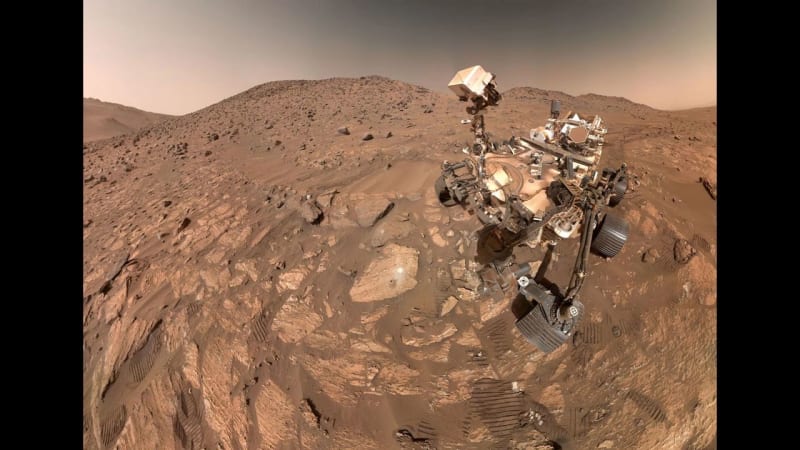
Life Finds a Way: NASA Scientists Uncover Surprising Bacterial Survivors in Spacecraft Clean Zones
Scientists discover 26 new bacterial species in NASA's cleanrooms, revealing life's incredible resilience in extreme environments. These microscopic survivors challenge our understanding of sterility and planetary protection.
In the most sterile environments on Earth, designed to prevent microscopic stowaways from hitching rides to other planets, life continues to surprise scientists with its remarkable resilience. Researchers have discovered 26 previously unknown bacterial species lurking within NASA's ultra-clean spacecraft assembly rooms, challenging our understanding of microbial survival in extreme conditions.
A team led by Alexandre Rosado from King Abdullah University of Science and Technology found these tenacious microorganisms in the Kennedy Space Center cleanrooms where the Phoenix Mars Lander was assembled in 2007. The discovery prompted what Rosado described as a 'stop and re-check everything' moment, revealing how some bacteria have evolved extraordinary genetic strategies to persist in environments engineered to be hostile to life.
Despite NASA's rigorous protocols involving continuously filtered air, strict humidity control, chemical detergents, and UV light treatments, these microbes demonstrated an incredible ability to survive. The cleanrooms, which are critical for preventing Earth organisms from contaminating other worlds, are not completely sterile – a fact that has significant implications for planetary exploration.
The scientific team, which included NASA's Jet Propulsion Laboratory senior research scientist Kasthuri Venkateswaran, collected and preserved 215 bacterial strains from cleanroom floors during their research. What makes these discoveries particularly fascinating is the potential for these microbes to survive space travel, potentially carrying genetic adaptations like DNA repair mechanisms and dormancy-related resilience.
To further investigate these remarkable organisms, researchers are constructing a specialized planetary simulation chamber at their university. This innovative facility, expected to begin pilot experiments in early 2026, will recreate Mars-like conditions including low carbon-dioxide-rich air pressure, high radiation levels, and extreme temperature variations. By exposing these bacteria to simulated spaceflight and Martian surface conditions, scientists hope to understand how they might survive interplanetary journeys.
While the researchers caution that survival would depend on handling multiple harsh conditions – including exposure to vacuum, intense radiation, deep cold, and high UV levels – the discovery opens fascinating questions about life's adaptability. As Rosado noted, these new species are typically rare but demonstrate a remarkable long-term, low-level persistence in environments designed to eliminate them.
This groundbreaking research not only provides insights into microbial survival strategies but also highlights the complex challenges of planetary protection. As humanity continues to explore beyond Earth, understanding how microscopic life can adapt and potentially travel between worlds becomes increasingly crucial for responsible space exploration.
Based on reporting by Live Science
This story was written by BrightWire based on verified news reports.
More Good News
 🚀 Innovation
Martian Minutes: Scientists Unravel the Mystery of Time Beyond Earth
 🚀 Innovation
NASA's Space Shuttle Discovery Faces Uncertain Future in Houston Museum Transfer
 🚀 Innovation