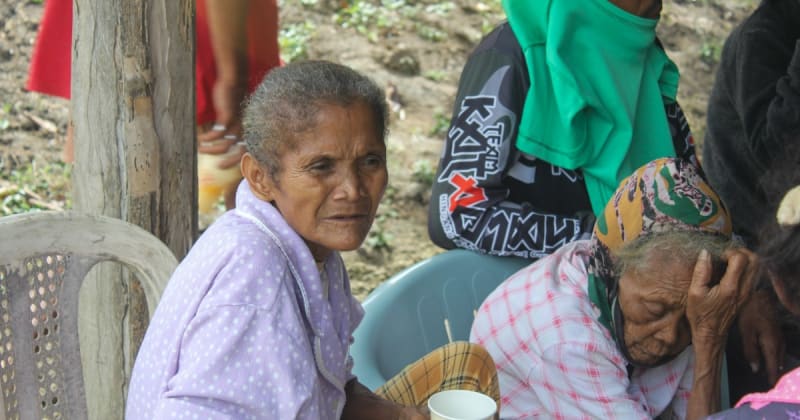
Indigenous Aeta Community Fights to Preserve Heritage Amid Philippine Development Project
An Indigenous Aeta community fights to preserve their ancestral lands as the Philippine government develops a massive 'smart city' project. Their battle highlights the complex tensions between modernization and cultural heritage.
In the lush landscapes north of Manila, a profound cultural battle is unfolding as the Philippine government advances plans for a massive "smart city" that threatens to displace an Indigenous community with centuries of deep-rooted history.
The New Clark City project, constructed on the former Clark Air Base, represents an ambitious national development initiative aimed at attracting international investment and alleviating Manila's overcrowding. President Ferdinand Marcos Jr envisions the site as a future "tourism mecca" and investment hub, with plans including expansive infrastructure like new train lines, expanded airport runways, and a $515 million stadium potentially designed to attract global pop star Taylor Swift.
At the heart of this development lies the Indigenous Aeta village of Sapang Kawayan, home to approximately 500 families living in traditional nipa grass and rattan houses. Petronila Capiz, the 60-year-old chieftain of the Aeta Hungey tribe, passionately articulates their historical connection: "We were here before the Americans, even before the Spanish."
Historical records confirm the Aetas' long-standing presence, noting that American colonizers seized the 32,000-hectare tract in the 1920s, systematically displacing these seminomadic people who are considered among the archipelago's earliest inhabitants. While some Aetas were employed as laborers after displacement, approximately 20,000 remain spread across 32 villages in the Clark area today.
The community is now strategically mobilizing, collaborating with University of the Philippines researchers to expedite a Certificate of Ancestral Domain Title (CADT) application - the sole legal mechanism that could protect their territorial rights. Throughout 2023, Aeta community members have meticulously documented their generational presence, assembling family histories and collecting photographic evidence to substantiate their claim.
Their proposed 17,000-hectare territory significantly overlaps with the 9,450 hectares designated for New Clark City, creating a potential collision between modernization and cultural preservation. As Capiz poignantly explains, the development threatens to "eat up the fields where we farm, the rivers where we fish, and the mountains where we get our herbs."
The Philippine government, through the Bases Conversion and Development Authority (BCDA), describes the project as a "green, smart and disaster-resilient metropolis" designed to accommodate 1.2 million residents over an estimated 30-year development timeline. Construction, which began in 2018, has already produced major roads and a sports complex that hosted the 2019 Southeast Asian Games.
As New Clark City continues to take shape, the Aeta community of Sapang Kawayan stands at a critical juncture, representing a profound struggle to maintain cultural identity and ancestral connection in the face of rapid technological and economic transformation.
Based on reporting by Al Jazeera
This story was written by BrightWire based on verified news reports.
More Good News
 🦸 Heroes
Nation Mourns: Bangladesh Bids Emotional Farewell to Pioneering Leader Khaleda Zia
 🦸 Heroes
Breaking Barriers: First Woman Archbishop Brings Collaborative Vision to Church of England
 🦸 Heroes