Nation Mourns: Bangladesh Bids Emotional Farewell to Pioneering Leader Khaleda Zia
Bangladesh mourns the passing of former Prime Minister Khaleda Zia, a pioneering female leader who transformed the nation's political landscape. Her state funeral drew massive crowds honoring her legacy of democratic advocacy and women's empowerment.
Bangladesh united in profound grief on Wednesday as hundreds of thousands of citizens gathered in Dhaka to honor the legacy of former Prime Minister Khaleda Zia, a trailblazing political figure who transformed the nation's democratic landscape.
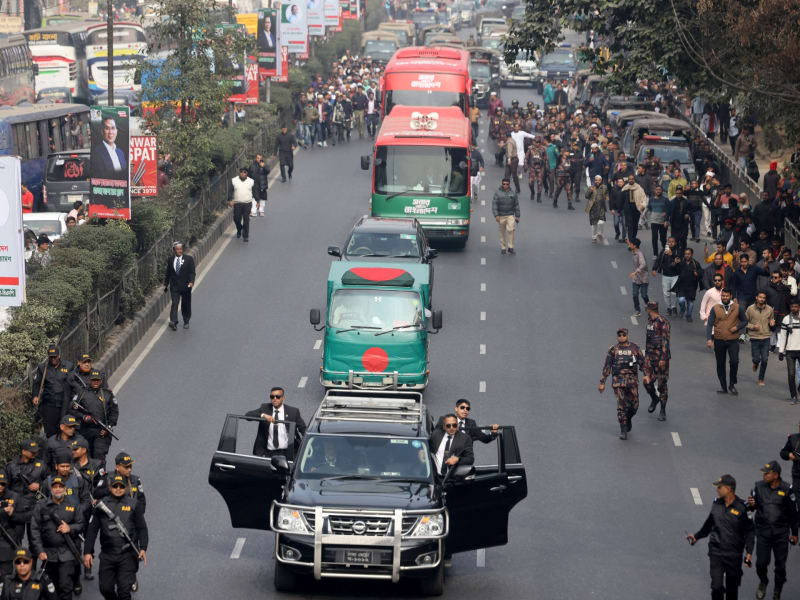
The state funeral drew massive crowds streaming towards the national parliament building, with mourners traveling from across the country to pay their final respects to the 79-year-old leader who passed away after a prolonged illness. Her coffin, elegantly draped in the national flag, was transported in a solemn convoy while approximately 10,000 security personnel maintained order along the route.
As emotions ran high, journalists and citizens alike remembered Zia as a pivotal figure in Bangladesh's democratic movement. She made history as the country's first female prime minister when she assumed office in 1991, breaking significant gender barriers in South Asian politics. Mourners repeatedly described her as an 'inspiration' and a guiding light for women's political participation.
International dignitaries, including India's Foreign Minister Subrahmanyam Jaishankar and senior Pakistani officials, attended the funeral, underscoring Zia's regional political significance. Her son Tarique Rahman, returning from 17 years of self-imposed exile in the United Kingdom, described his mother as having 'endured repeated arrests' while maintaining 'unbreakable resilience'.
Personal stories highlighted Zia's lasting impact. Sharmina Siraj, a 40-year-old mother, credited Zia's educational stipends for girls as a transformative program that dramatically expanded opportunities for women. Retired government official Minhaz Uddin, though not a political supporter, came to honor her contributions to the nation's political development.
The government has declared three days of national mourning, reflecting the profound respect for Zia's political legacy. Her body will be interred in a park outside the parliament building beside her late husband, Ziaur Rahman, who was assassinated in 1981 during his presidency. With her son Tarique Rahman potentially positioning himself as a future political leader, Zia's political dynasty appears poised to continue its influential role in Bangladesh's democratic journey.
As Bangladesh bid farewell to this remarkable leader, the overwhelming sentiment was one of collective grief and gratitude for a politician who championed democratic ideals and inspired generations of citizens to believe in political transformation.
Based on reporting by Al Jazeera
This story was written by BrightWire based on verified news reports.
More Good News
 🦸 Heroes
Breaking Barriers: First Woman Archbishop Brings Collaborative Vision to Church of England
 🦸 Heroes
Idris Elba Receives Knighthood for Inspiring Youth Empowerment and Social Change
 🦸 Heroes