Groundbreaking Study Challenges Assumptions About Economic Inequality and Mental Health
A comprehensive meta-analysis reveals no direct link between economic inequality and mental health, challenging long-standing assumptions about social structures and psychological well-being. The study invites more nuanced approaches to understanding complex human experiences.
A landmark scientific investigation is reshaping our understanding of economic disparities and their potential psychological impacts, revealing surprising insights that could transform social policy discussions.
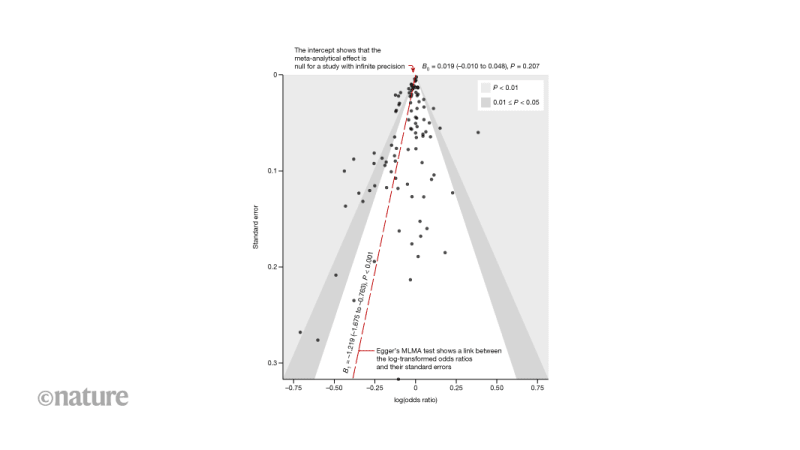
Researchers led by Nicolas Sommet have conducted a comprehensive meta-analysis challenging long-held beliefs about the relationship between economic inequality and individual well-being. Published in Nature, the study systematically examined multiple prior research streams to determine whether income gaps directly correlate with mental health challenges.
The research team meticulously reviewed extensive scientific literature, including significant works by prominent scholars like Wilkinson and Pickett, who previously suggested strong connections between economic inequality and psychological distress. Contrary to established narratives, Sommet's analysis found no statistically significant meta-analytical effect linking economic inequality with personal mental health outcomes.
By carefully analyzing data from multiple international studies, including research published in journals like European Journal of Social Psychology, World Health Organization Bulletin, and Lancet Psychiatry, the investigators discovered that presumed causal relationships between income disparities and psychological well-being were not consistently supported by empirical evidence.
This groundbreaking work represents a critical moment in social science research, potentially compelling policymakers and mental health professionals to reconsider simplistic narratives about economic structures and individual psychological experiences. The study suggests that complex human experiences cannot be reduced to straightforward economic metrics, emphasizing the need for nuanced, multifaceted approaches to understanding social dynamics.
While the research does not dismiss the challenges of economic inequality, it provides a more sophisticated framework for understanding how societal structures interact with individual experiences. The findings invite further scholarly investigation and challenge researchers to develop more comprehensive models of social well-being that move beyond linear economic interpretations.
Sommet and colleagues' work, part of an emerging trend of rigorous meta-analytical research, underscores the importance of continuously questioning established academic assumptions and maintaining scientific skepticism in social science investigations.
Based on reporting by Nature News
This story was written by BrightWire based on verified news reports.
Spread the positivity! 🌟
Share this good news with someone who needs it