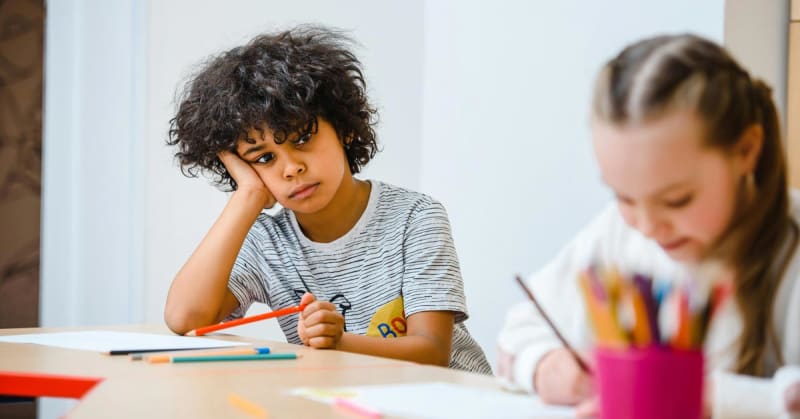
Why Boredom Might Be the Unexpected Superpower Your Child Needs
Discover how boredom can be a secret weapon in child development, helping kids build creativity, resilience, and self-understanding. Learn why letting children experience unstructured time is more beneficial than constant entertainment.
In our hyper-connected digital age, where screens and structured activities dominate children's lives, a surprising ally in childhood development is emerging: boredom. Far from being an undesirable emotional state, researchers are discovering that moments of seemingly unproductive downtime can actually be crucial for personal growth and creativity.
Communication and culture expert Dr. [NAME REDACTED] has been studying this phenomenon closely while writing a book on modern parenting. Her research reveals that parents' instinctive response to eliminate boredom might actually be hindering their children's cognitive and emotional development. In an era where smartphones and tablets can instantly banish restlessness, children are losing opportunities to explore their inner landscapes and develop critical life skills.
The pandemic dramatically accelerated screen time for children, with many parents using digital devices as convenient babysitters during work hours. This trend, combined with increasing social pressure to keep children quietly occupied in public spaces, has created an environment where unstructured time has become almost extinct. Yet evolutionary psychology suggests that boredom isn't just normal—it's potentially beneficial.
Harvard professor Arthur Brooks has found that boredom is essential for meaningful reflection. By creating mental space away from constant stimulation, children can discover new goals, cultivate curiosity, and develop crucial executive functioning skills like goal-setting and planning. Psychologically, boredom acts as an internal signal that something needs to change, whether that means shifting activities, exploring a new environment, or engaging with different people.
Surprisingly, tolerating boredom is a skill many children—and adults—struggle to master. Research indicates that overly managed children might face increased risks of depression and emotional regulation challenges. By contrast, children who learn to navigate unstructured time develop resilience, creativity, and self-management capabilities that serve them throughout life.
Parents seeking to support their children's development can start small: introduce brief periods of unstructured time, encourage outdoor play, suggest novel activities like cooking together, or simply allow moments of calm. The key is creating space for exploration without constant intervention. Younger children might need gentle guidance or initial activity suggestions, but the goal is gradually building their capacity to entertain themselves and find meaning in quiet moments.
As society becomes increasingly fast-paced and digitally saturated, understanding boredom's developmental benefits becomes more critical. What parents might perceive as an uncomfortable emotional state is actually a powerful tool for personal growth, creativity, and self-discovery. By reframing boredom not as a problem to solve, but as an opportunity to explore, parents can help their children develop essential life skills that extend far beyond momentary discomfort.
Based on reporting by Good Good Good
This story was written by BrightWire based on verified news reports.
More Good News



Start Your Day With Good News
Join 50,000+ readers who wake up to stories that inspire. Delivered fresh every morning.
No spam, ever. Unsubscribe anytime.