Global Water Crisis: How Earth's Continents Are Losing Precious Resources and What We Can Do
A groundbreaking World Bank report reveals continents are losing enough water to supply 280 million people annually. Researchers highlight critical challenges and potential solutions in global water management.
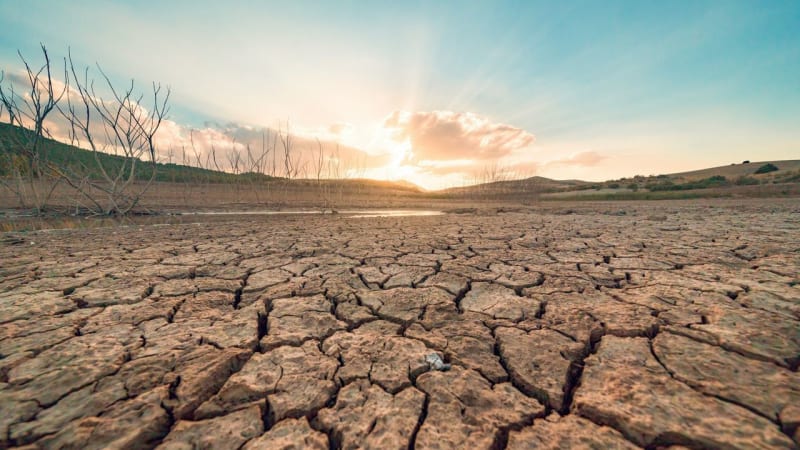
In a groundbreaking revelation that could reshape our understanding of global water resources, researchers have discovered that continents are losing enough fresh water annually to supply 280 million people — a staggering figure that highlights the urgent need for innovative water management strategies.
A comprehensive new report from the World Bank, based on 22 years of NASA satellite data, reveals that continental drying is accelerating at an unprecedented rate. Led by global experts Fan Zhang from the World Bank and Jay Famiglietti from Arizona State University, the study exposes how local water challenges are quickly transforming into international crises that threaten agriculture, ecosystems, and human livelihoods.
The research uncovered that continents are now contributing more to global sea level rise than ice sheets, losing approximately 11.4 trillion cubic feet of water each year. To put this into perspective, Zhang dramatically noted that 'Every second you lose four Olympic-size swimming pools' of fresh water. The average annual water loss represents 3% of the world's total precipitation, escalating to 10% in arid and semi-arid regions like South Asia.
The consequences of this water loss extend far beyond simple resource depletion. Regions dependent on agriculture, such as sub-Saharan Africa and South Asia, are experiencing profound economic impacts. Dry shocks are reducing job markets by 600,000 to 900,000 positions annually, with the most vulnerable populations — like landless farmers — bearing the heaviest burden. Moreover, the ecological implications are equally alarming, with at least 17 of 36 global biodiversity hotspots showing declining freshwater availability and increased wildfire risks.
Groundwater extraction emerges as the primary culprit behind continental drying. Famiglietti describes the current situation as a pumping 'free-for-all', with groundwater remaining poorly protected and undermanaged worldwide. Climate change is expected to exacerbate this trend, as warming temperatures will likely drive increased groundwater extraction as traditional water sources like soil moisture and glacial reserves diminish.
However, the report is not without hope. Researchers emphasize that targeted interventions could significantly mitigate water loss. With agriculture responsible for 98% of global water consumption, strategic reforms in farming practices and water management could yield substantial improvements. The study underscores that water challenges are not merely local issues but interconnected global problems requiring collaborative, innovative solutions.
As our planet faces increasing environmental pressures, this research serves as a critical wake-up call. By recognizing the profound interconnectedness of our water systems and implementing smart, adaptive strategies, we can work towards preserving this most precious resource for current and future generations.
Based on reporting by Live Science
This story was written by BrightWire based on verified news reports.
More Good News
 🌍 Planet
Global Communities Resilient in Face of Unprecedented 2025 Flooding Challenges
 🌍 Planet
Copper and Silver Prices Signal Major Shift Towards Green Energy Technologies
 🌍 Planet