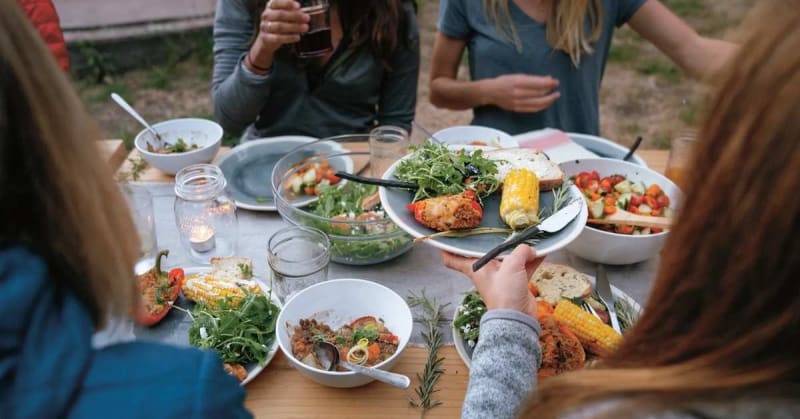
Climate Change on a Dinner Plate: How What We Eat Impacts Our Planet
A groundbreaking new cookbook reveals the surprising carbon footprint behind our favorite foods. Ecologist Mark Easter serves up scientific insights that could transform how we think about our daily meals.
When ecologist Mark Easter began writing 'The Blue Plate: A Food Lover's Guide to Climate Chaos', he wanted readers to understand something profound: every bite we take has a complex relationship with our planet's health.
After decades of research with the Natural Resources Ecology Laboratory at Colorado State University, Easter now works independently as a greenhouse gas accountant and writer, bringing scientific rigor to our understanding of food's environmental impact.
His innovative book uses a dinner party menu as a framework for exploring climate change, examining each course through a scientific lens. From bread to seafood, Easter reveals how different foods contribute to greenhouse gas emissions in unique and often surprising ways. The book's title—'The Blue Plate'—cleverly references the 'blue marble' view of Earth from space, suggesting we can nourish ourselves without consuming the planet itself.
One of Easter's most startling discoveries emerged while investigating shrimp production. He found that tropical shrimp farms, often built by clearing carbon-rich mangrove wetlands, create enormous environmental consequences. 'I was astonished to see the carbon stocks that mangrove forests hold,' Easter explained, drawing from his 25 years of experience as a greenhouse gas expert.
The book meticulously explores how different foods impact our climate, with each chapter dedicated to a specific ingredient. Wheat production, for instance, offers a compelling narrative about soil carbon. Easter highlights how grain cultivation dramatically affects organic carbon in soil, and how innovative farming techniques can actually help draw atmospheric carbon back into the earth, potentially rebuilding soil fertility.
Easter's work builds on conversations happening in climate journalism, including previous interviews with experts like Michael Grunwald, who famously framed our current situation as 'eating the Earth'. By transforming complex scientific data into an accessible dinner party metaphor, Easter makes climate science feel personal and immediate.
'The Blue Plate' represents more than just a cookbook—it's a roadmap for understanding our food system's intricate relationship with global environmental health. By serving up science on a plate, Easter invites readers to become more conscious consumers, showing how individual food choices can contribute to broader climate solutions.
For food lovers and environmental enthusiasts alike, Easter's book offers a deliciously thought-provoking journey through the hidden world of food-related emissions, proving that what's on our plate is about much more than just taste.
Based on reporting by Good Good Good
This story was written by BrightWire based on verified news reports.
More Good News
 🌍 Planet
Global Communities Resilient in Face of Unprecedented 2025 Flooding Challenges
 🌍 Planet
Copper and Silver Prices Signal Major Shift Towards Green Energy Technologies
 🌍 Planet