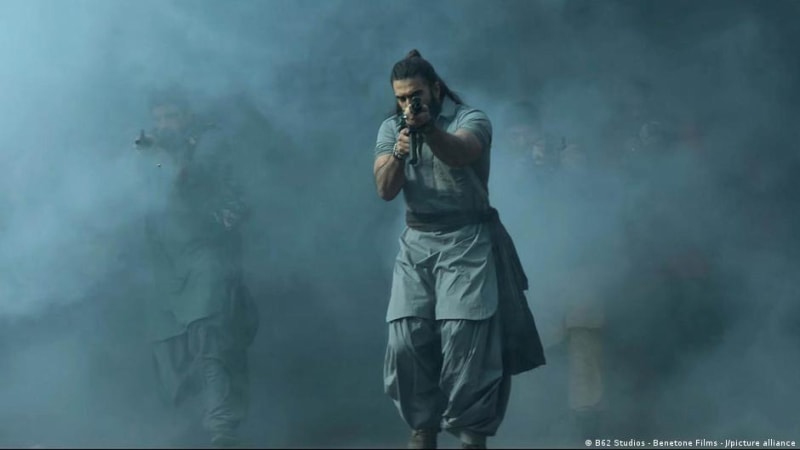
Bollywood's Bold Narrative: When Cinema Meets National Identity
A new Bollywood spy thriller explores the complex relationship between cinema, national identity, and political narrative. The film 'Dhurandhar' has sparked intense debate about representation and storytelling in contemporary Indian media.
In the vibrant landscape of Indian cinema, a new spy thriller is captivating audiences and sparking national conversations about storytelling, identity, and historical representation.
The Hindi-language film 'Dhurandhar', starring popular actor Ranveer Singh, has become a major box office success while simultaneously igniting debates about nationalist narratives in cinema. The 3.5-hour epic follows an Indian spy infiltrating criminal networks in Karachi, Pakistan, against the backdrop of ongoing geopolitical tensions between the two nuclear-armed neighbors.
The film represents a growing trend in Bollywood that some critics argue promotes hyper-nationalist perspectives aligned with the ruling Bharatiya Janata Party (BJP) government. Movies like 'The Kashmir Files', 'Kerala Story', and now 'Dhurandhar' have been accused of presenting politically convenient historical interpretations that potentially amplify cultural divisions.
Film critic Ishita Sengupta noted the economic incentive driving such productions: 'When films like The Kashmir Files and The Kerala Story did well, it incentivized other filmmakers to tell similar stories. Numbers are proof that propaganda films have become the latest gamble in the industry.'
The BJP, however, robustly defends these cinematic efforts. Spokesperson Shazia Ilmi argues that India has every right to tell its own stories, drawing parallels to Western cinema's long history of depicting geopolitical adversaries. 'Why shouldn't India make films celebrating its own heroism and resilience, especially given the country's fraught history with Pakistan?' she asked.
Ilmi pointedly highlighted the double standard, referencing numerous Hollywood films featuring Russian antagonists like Ivan Drago in Rocky IV and Ivan Vanko in Iron Man 2, questioning why similar narratives are acceptable when produced by Western countries but criticized when emerging from India.
Supreme Court lawyer Shahrukh Alam offers a more critical perspective, describing such films as 'lazy, state-sponsored, majoritarian filmmaking' that potentially manipulate audience emotions by invoking raw anger, resentment, and fear without providing constructive resolution.
As the debate continues, 'Dhurandhar' stands as a fascinating case study of contemporary Indian cinema—a complex intersection of artistic expression, national identity, and political discourse that reflects the multifaceted nature of modern storytelling in a diverse and dynamic society.
Based on reporting by DW News
This story was written by BrightWire based on verified news reports.
More Good News
 🦸 Heroes
Nation Mourns: Bangladesh Bids Emotional Farewell to Pioneering Leader Khaleda Zia
 🦸 Heroes
Breaking Barriers: First Woman Archbishop Brings Collaborative Vision to Church of England
 🦸 Heroes