Antarctic Explorers Ski 4000km, Unlock Climate Secrets with Cutting-Edge Science
Two daring researchers traverse Antarctica's harsh landscape, collecting critical climate data using innovative kite-skiing techniques. Their journey promises unprecedented insights into the continent's fragile ecosystem.
In the stark, endless white of Antarctica, an extraordinary scientific expedition is unfolding—a 4000-kilometer journey that combines extreme adventure with groundbreaking research.
Glaciologist Heïdi Sevestre and explorer Matthieu Tordeur are traversing the continent's most remote regions, using kite-skiing techniques to collect unprecedented subsurface data about our planet's changing climate.
Their remarkable expedition, which began on November 3rd, allows them to travel up to 35 kilometers per hour while towing advanced ground-penetrating radar equipment. This innovative approach enables them to scan snow and ice layers up to 40 meters deep in regions previously considered inaccessible to scientific research.
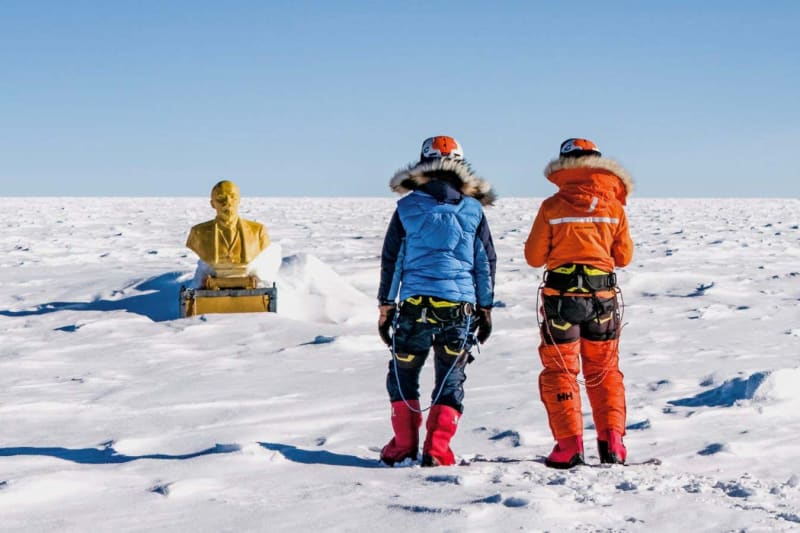
The journey has already yielded surreal moments, such as encountering a lonely bust of Vladimir Lenin at the southern pole of inaccessibility—a poignant reminder of human presence in this vast, inhospitable landscape. 'I almost had tears in my eyes,' Sevestre recalled. 'We felt really humble, really small.'
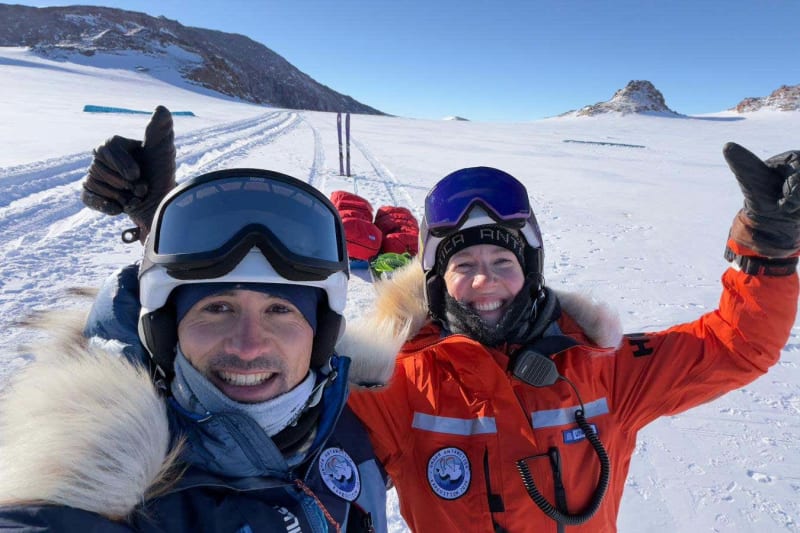
For Tordeur, who became the youngest person to ski solo to the South Pole in 2019, this expedition represents a deliberate fusion of adventure and scientific inquiry. 'It was much better to use kites, because we would be able to travel much further and do science much further inland in the continent where scientists don't go often,' he explained.
Their scientific mission is critically important. Researchers are working to understand whether increased snowfall in East Antarctica might be offsetting coastal melting—a complex climate puzzle that could have significant global implications. The data collected could help produce more accurate estimates of Antarctic ice sheet dynamics.
From the South Pole, Tordeur and Sevestre will deploy an even more powerful radar capable of penetrating two kilometers deep. British Antarctic Survey researchers hope this will help trace ancient ice layers, potentially revealing whether West Antarctica—which contains enough ice to raise sea levels by up to 5 meters—remained stable during previous climate periods.
Despite challenges like navigating nearly 1,000 kilometers of sastrugi—wind-sculpted snow ripples that can damage equipment—the team maintains remarkable resilience. Sevestre keeps perspective by listening to audiobooks about historic Antarctic expeditions, drawing inspiration from explorers who faced even more extreme conditions.
Their groundbreaking expedition represents more than a personal challenge; it's a critical scientific endeavor that could help humanity better understand and prepare for our planet's rapidly changing climate landscape.
Based on reporting by New Scientist
This story was written by BrightWire based on verified news reports.
Spread the positivity! 🌟
Share this good news with someone who needs it