Ancient Armenian Wagon Reveals Bronze Age Burial Practices and Engineering Brilliance
A 3,500-year-old Armenian wagon reveals extraordinary Bronze Age engineering and cultural practices. This meticulously preserved vehicle offers unprecedented insights into ancient transportation and spiritual beliefs.
Nestled in the mountainous terrain of Armenia, an extraordinary archaeological discovery tells a story of sophisticated engineering and profound cultural reverence for leadership that stretches back 3,500 years. The Lchashen wagon, a meticulously crafted oak vehicle unearthed near Lake Sevan, represents one of the most remarkable preserved examples of Bronze Age transportation technology.
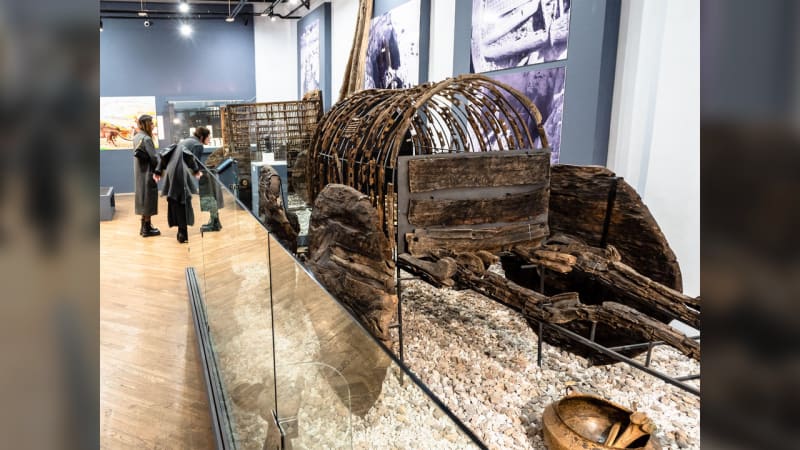
During the 1950s, Soviet construction workers draining part of Lake Sevan uncovered a remarkable Late Bronze Age cemetery containing over 500 burials and hundreds of intricate grave goods. Among these treasures, six oak wagons stood out, with four featuring complex canopy structures that demonstrated remarkable woodworking skills of the era. One wagon in particular, now displayed at the History Museum of Armenia in Yerevan, has become a centerpiece of archaeological understanding about early transportation and burial practices.
This extraordinary vehicle measures approximately 6.5 feet in length, with massive wooden wheels standing an impressive 63 inches tall. Each wheel was crafted from two precisely joined wooden slabs, revealing the incredible craftsmanship of Bronze Age artisans. The wagon's construction involved at least 70 distinct parts, connected through an intricate mortise-and-tenon system using wooden slots and bronze fittings. Archaeologist Stuart Piggott noted that the canopy frame alone required over 600 mortise holes, underscoring the precision of ancient engineers.
While some might claim this is the world's oldest wagon, archaeological evidence suggests wheeled vehicles originated much earlier in Mesopotamia during the Copper Age, between 4500 and 3300 B.C. However, the Lchashen wagon represents a pinnacle of early covered wagon design, featuring innovative spoked wheels mounted on axles. Its discovery provides crucial insights into the technological and cultural developments of Bronze Age civilizations in the Caucasus region.
The wagon's presence in a burial context reveals profound cultural significance beyond mere transportation. According to the History Museum of Armenia, wheeled vehicle burials emerged during the Middle Bronze Age but became most prevalent in the Late Bronze Age. These vehicles were not just modes of transport but symbolic vessels believed to carry deceased leaders into the afterlife, representing a complex spiritual understanding of death and transition.
As an archaeological treasure, the Lchashen wagon challenges our understanding of ancient technological capabilities. It demonstrates that societies like those in Bronze Age Armenia possessed sophisticated engineering skills, complex cultural practices, and a deep respect for leadership that extended beyond physical life. This remarkable artifact continues to inspire researchers and historians, offering a tangible connection to a civilization that thrived thousands of years before our modern era.
Based on reporting by Live Science
This story was written by BrightWire based on verified news reports.
More Good News
 🦸 Heroes
From Struggle to Success: How One High School's Support Launched a Lifelong Journey of Giving Back
 🦸 Heroes
Heroism Beyond Borders: How One Man Risked Everything to Save Strangers
 🦸 Heroes
Red Gold: How One Algerian Teacher Transformed Saffron Farming in Béjaïa
Start Your Day With Good News
Join 50,000+ readers who wake up to stories that inspire. Delivered fresh every morning.
No spam, ever. Unsubscribe anytime.