XPENG and Peking University Breakthrough: AI Learns to Drive Like Humans with Innovative Token Pruning
XPENG and Peking University unveil groundbreaking AI framework that enables autonomous vehicles to process visual information more efficiently. Their innovative token pruning technology could revolutionize how self-driving cars understand and navigate complex environments.
In a groundbreaking achievement for autonomous driving technology, XPENG and Peking University have developed a revolutionary artificial intelligence framework that could transform how vehicles 'see' and navigate complex environments. Their research, accepted by the prestigious AAAI 2026 conference – which received an impressive 23,680 submissions with only 4,167 papers accepted – introduces FastDriveVLA, an ingenious method that allows AI to process visual information more like a human driver.
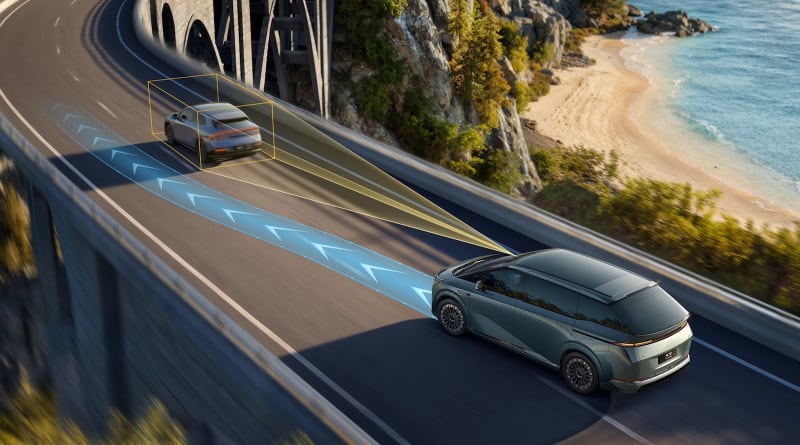
The innovative framework addresses a critical challenge in autonomous driving: how to efficiently process massive amounts of visual data without overwhelming computational systems. By developing a reconstruction-based token pruning approach, the research team has created a method that dramatically reduces computational load while maintaining high planning accuracy, effectively allowing AI to focus on essential visual information just as human drivers instinctively do.
At the core of FastDriveVLA is an adversarial foreground-background reconstruction strategy that enables the AI to identify and retain only the most valuable visual tokens. In practical terms, this means the system can now concentrate on critical elements like lanes, vehicles, and pedestrians while efficiently filtering out irrelevant background information. During testing on the nuScenes autonomous driving benchmark, the framework achieved remarkable results, reducing visual tokens from 3,249 to 812 while maintaining nearly the same performance – a 7.5x reduction in computational complexity.
This breakthrough represents XPENG's continued commitment to pushing the boundaries of intelligent mobility. The company, which has already made significant strides in autonomous driving technology, sees this research as a critical step toward achieving Level 4 autonomous driving capabilities. Their approach reflects a holistic, full-stack development strategy that encompasses everything from model architecture design to vehicle deployment.
XPENG's global vision extends beyond this single technological achievement. With research and development centers spanning China and international locations including the United States and multiple European countries, the company is positioning itself as a true 'Explorer of Future Mobility'. Their commitment to in-house development of intelligent driver-assistance software and core hardware demonstrates a comprehensive approach to transforming transportation.
The research team's success at AAAI 2026 follows another significant milestone earlier in the year, when XPENG was the sole Chinese automaker invited to speak at CVPR WAD, sharing advances in autonomous driving foundation models. During their November Tech Day, the company unveiled its VLA 2.0 architecture, which represents another leap forward by enabling direct Visual-to-Action generation and removing traditional language translation steps.
As autonomous driving technology continues to evolve, XPENG's approach offers a glimpse into a future where vehicles can process complex environmental information with unprecedented efficiency and intelligence. By developing AI systems that more closely mimic human perception, the company is not just improving technology – they're reimagining how we interact with transportation itself.
Based on reporting by CleanTechnica
This story was written by BrightWire based on verified news reports.
More Good News


Start Your Day With Good News
Join 50,000+ readers who wake up to stories that inspire. Delivered fresh every morning.
No spam, ever. Unsubscribe anytime.