White House Historian Reveals Presidential Renovation Traditions Behind Trump's Ballroom
White House historian Gary Walters reveals presidential renovation is a long-standing tradition, providing context for Trump's controversial ballroom project. His insights show how each president personalizes the historic residence to meet changing diplomatic and social needs.
Presidential renovations have long been a complex dance of tradition and personal vision, as revealed by one of the White House's most experienced insider experts.
Gary Walters, who served as chief usher for four presidential administrations, provides unique context for President Trump's controversial East Wing ballroom project. In an illuminating interview about his recently published memoir, Walters shared that every president he served discussed expanding White House entertainment spaces - challenging perceptions that Trump's renovation is unprecedented.
Trump's proposed 90,000-square-foot ballroom, initially estimated at $200 million and later revised to $400 million, would accommodate up to 999 guests. The project involves demolishing the historic two-story East Wing, a decision that initially shocked historians and preservationists. However, Walters emphasized that White House construction has been continuous throughout its history, from the 1902 West Wing construction to wartime expansions.
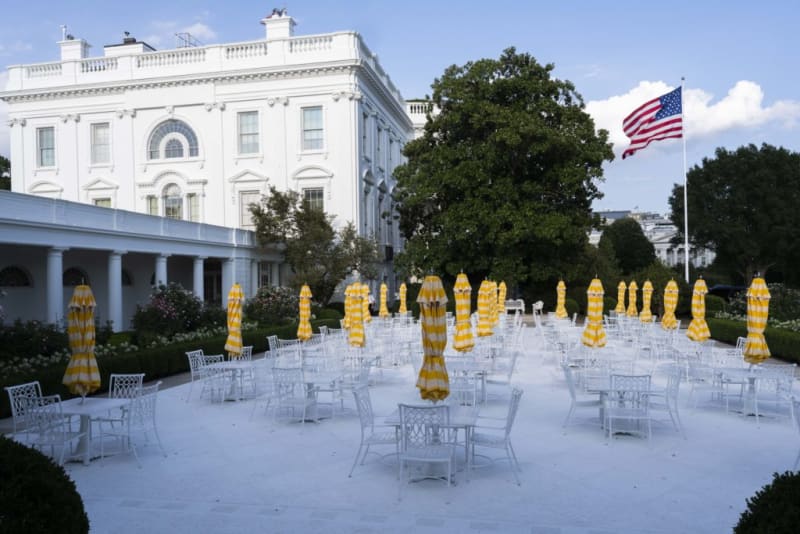
The veteran White House manager explained that presidential social spaces have always been limited. The State Dining Room currently seats only 130 people across 13 round tables, while the East Room can accommodate roughly 300 chairs. These constraints have frustrated multiple administrations, leading to temporary solutions like large event tents - which Walters noted created their own maintenance challenges, including soggy grass and reseeding requirements.
Walters' personal connection to the White House adds depth to his perspective. He met his wife Barbara, a former receptionist, while working in the residence, and they recently celebrated 48 years of marriage. His 25-year tenure as chief usher provides him unique insights into presidential living spaces and their evolving needs.
The longtime White House insider suggests that Trump's ballroom project, while controversial, follows a long tradition of presidential personalization of the historic residence. By providing historical context, Walters helps Americans understand that each president leaves a physical mark on this symbolic national home, reflecting both practical needs and personal vision.
While the $400 million project remains divisive, Walters' perspective offers a nuanced view of presidential space management - revealing that the desire to create memorable moments and accommodate growing diplomatic needs transcends political boundaries.
Based on reporting by PBS NewsHour
This story was written by BrightWire based on verified news reports.
Spread the positivity! 🌟
Share this good news with someone who needs it
More Good News
 ✨ Good News
White House Diplomacy: Trump and Netanyahu Set to Address Global Audience
 ✨ Good News
US Economy in 2026: A Complex Landscape of Growth and Uncertainty
 ✨ Good News