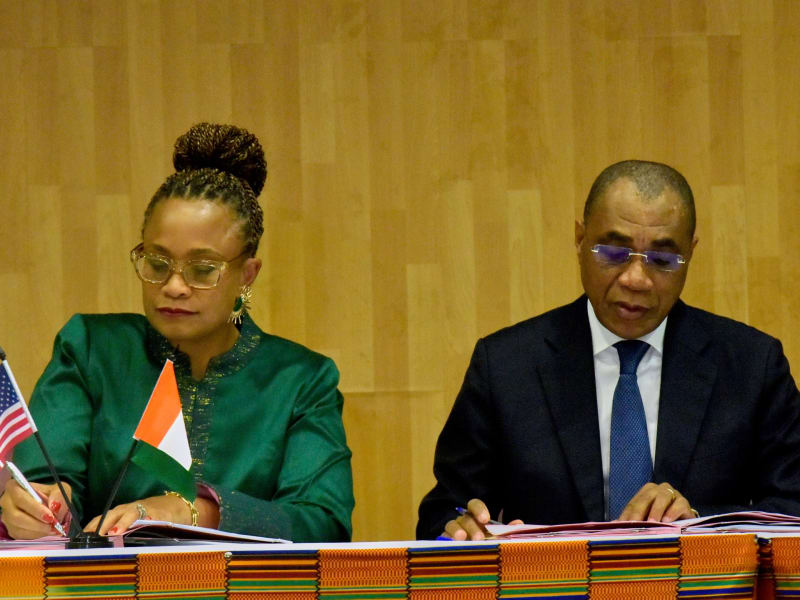
US Forges Innovative Health Partnership with Ivory Coast, Signaling New Global Aid Approach
The United States signs a groundbreaking $480 million health partnership with Ivory Coast, signaling a new approach to international aid. The innovative agreement prioritizes mutual investment and sustainable development strategies.
In a landmark diplomatic moment, the United States has committed $480 million in public health assistance to the Ivory Coast, marking a significant shift in international development strategy under the Trump administration's America First Global Health Initiative.
The agreement, ceremonially signed in Abidjan, represents a groundbreaking approach to bilateral health cooperation that aims to transform traditional aid models. US Ambassador Jessica Davis Ba emphasized that the partnership is moving "beyond the traditional aid approach toward a model focused on trade, innovation, and shared prosperity".
Central to the deal is a mutual commitment to long-term health investment, with the Ivory Coast pledging to contribute up to $292 million to health funding by 2030. This collaborative framework signals a strategic departure from previous comprehensive aid programs, particularly in the wake of significant reductions to the US Agency for International Development (USAID).
The Trump administration has consistently argued that previous international health assistance strategies were inefficient and lacked proper accountability. By establishing direct bilateral agreements with individual nations, they believe they can create more transparent, targeted, and sustainable health interventions.
However, public health experts have raised nuanced concerns about this new approach. Analysts from the Center for Global Development have highlighted potential risks, including the possibility of health priorities being shaped by transactional pressures and uncertainties about service continuity if partner countries cannot meet their commitments.
The Ivory Coast agreement is the largest of more than a dozen similar arrangements the administration has negotiated, representing a significant reimagining of global health diplomacy. While the strategy aims to address critical health challenges like HIV prevention, maternal healthcare, and infectious disease monitoring, experts warn that the rapid implementation could potentially compromise hard-won public health gains.
Despite the challenges, the partnership represents an innovative attempt to reimagine international health cooperation, prioritizing mutual investment, shared responsibility, and long-term sustainable development. As global health landscapes continue to evolve, partnerships like this may offer a glimpse into future diplomatic and humanitarian engagement models.
Based on reporting by Al Jazeera
This story was written by BrightWire based on verified news reports.
More Good News
 💡 Solutions
Historic Victory: First Black Woman Elected to Iowa State Senate Blocks GOP Supermajority
 💡 Solutions
Taiwan Remains Vigilant as China Concludes Major Military Exercises
 💡 Solutions