The Remarkable Fish-Eating Bats of Mexico's Gulf of California: A Scientific Journey of Discovery
Discover the incredible world of Mexico's fish-eating bats, a unique species that thrives in extreme conditions and challenges our understanding of mammalian adaptation. These remarkable creatures, studied by dedicated researchers, represent a fascinating example of evolutionary specialization in one of the world's most challenging environments.
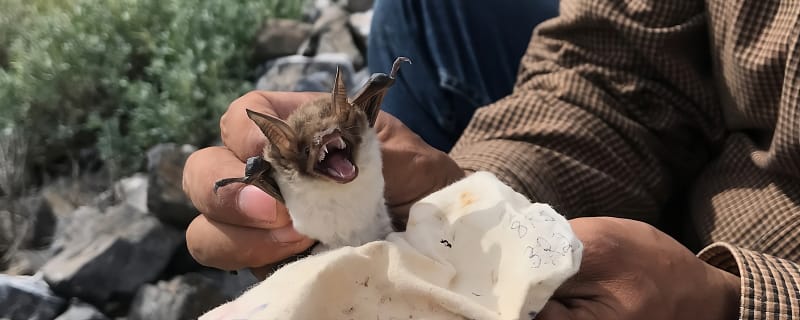
In the rugged, sun-scorched islands of Mexico's Gulf of California, a unique creature defies expectations and thrives in seemingly impossible conditions: the fish-eating bat. These extraordinary mammals, scientifically known as Myotis vivesi, have captivated researchers like José Juan Flores Martínez, who first encountered them during a routine rodent control expedition in the early 2000s.
Flores Martínez, now an academic technician at the National Autonomous University of Mexico's Institute of Biology, was initially stunned by these resilient creatures. Hearing their distinctive clicking sounds emerging from rocky landscapes, he was intrigued by their ability to survive in extreme temperatures ranging from sub-freezing to over 50 degrees Celsius. What truly amazed him was the revelation that these bats actually feed on fish - a behavior almost unheard of in the bat world.
The fish-eating bat is a marvel of evolutionary adaptation. As the largest bat in its genus, it can reach up to 16 centimeters in length, sporting long, waterproof fur that allows it to maneuver effortlessly above sea surfaces. Its uniquely designed long legs and flat, hook-shaped claws enable it to catch fish and crustaceans with remarkable precision. To date, these remarkable mammals have been documented on more than 45 islands in the Gulf of California, with Isla Partida Norte hosting the largest known colony - tens of thousands of individuals in a critical breeding habitat.
Scientifically classified as vulnerable on the IUCN Red List and endangered under Mexican law, these bats represent more than just a fascinating species - they are crucial environmental indicators. Their presence signifies a well-preserved ecosystem, and their absence often indicates significant environmental disruption. The bats' extraordinary physiological adaptations set them apart from other bat species: they can drop into the sea and immediately resume flight, possess kidneys uniquely adapted to process seawater, and utilize their expansive uropatagium (membrane between legs) as a storage pouch for captured prey.
Flores Martínez's quarter-century of research, conducted alongside colleague Gerardo Herrera Montalvo, has revealed these bats' critical role in island ecosystems. Their guano contributes to rock and mound formations, and they function almost like marine birds in nutrient exchange. Unlike invasive predators such as cats or rodents, these bats are integral to their island environments, representing a delicate and sophisticated ecological balance that demands scientific understanding and conservation efforts.
The story of Mexico's fish-eating bats is a testament to nature's incredible capacity for specialization and survival. In the harsh, unforgiving landscapes of the Gulf of California, these remarkable creatures have not just survived, but evolved into a unique species that challenges our understanding of mammalian adaptation. Through dedicated research and passionate scientific inquiry, researchers like Flores Martínez continue to unveil the secrets of these extraordinary marine-hunting bats.
Based on reporting by Mongabay
This story was written by BrightWire based on verified news reports.
Spread the positivity! 🌟
Share this good news with someone who needs it
More Good News
 🌍 Planet
Environmental News Site Reaches 110 Million Readers, Proves Impact Matters More Than Clicks
 🌍 Planet
Rare Blue Galapagos Rail Emerges from Extinction, Marking Remarkable Island Restoration Success
 🌍 Planet