Tanzania's Shifting Landscapes: Game Reserves Spark Community Tensions and Conservation Debates
Tanzania's expanding game reserves are dramatically transforming rural Maasai communities, sparking intense debates about conservation, economic development, and indigenous land rights. The government's strategic land reclassification is displacing thousands while pursuing tourism and environmental objectives.
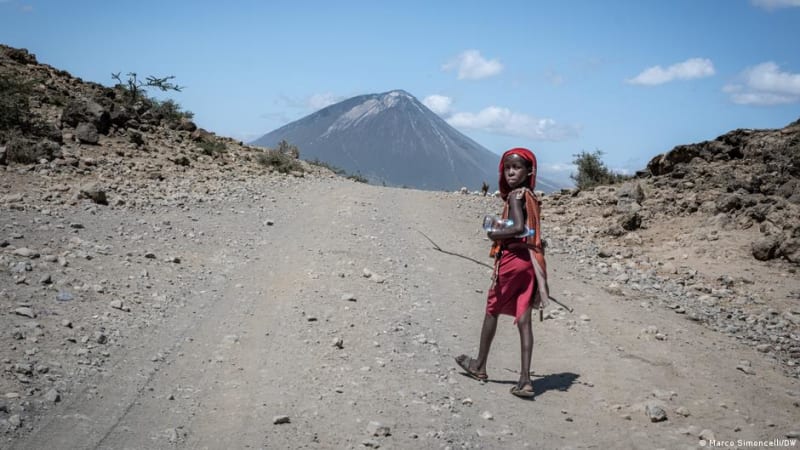
At the base of Ol'doinyo Lengai, the sacred Mountain of God, a complex story of environmental conservation and human displacement is unfolding in northern Tanzania. Lake Natron, a shimmering salt lake renowned as the world's most critical breeding ground for 75% of lesser flamingos, has become ground zero for a contentious land management strategy that is dramatically reshaping rural Maasai communities.
The Tanzanian government's recent establishment of the Pololeti Game Reserve in 2022 has already displaced thousands, including 36-year-old Nesikar Daudi, who was forcibly relocated from her ancestral lands. 'We suffered a lot because of this takeover. We lost our livestock, and bulldozers demolished our homes,' Daudi shared, reflecting the profound personal cost of these governmental initiatives.
Since the 1990s, Tanzania has expanded its protected areas by 20%, but Maasai lawyer and activist Joseph Oleshengay argues that these actions are less about environmental preservation and more about economic opportunism. 'It is essentially a mechanism for land dispossession,' Oleshengay asserts, suggesting that behind environmental rhetoric lie significant tourism and trophy hunting economic interests.
The legal framework supporting these transformations is stark: Tanzanian law allows the government to reclassify any land deemed to serve 'public interest,' effectively giving the head of state unilateral power to determine entire communities' futures without mandatory consultation. Currently, approximately 43% of Tanzania's territory falls within protected areas, spanning roughly 159,000 square kilometers — an area larger than neighboring Malawi.
These protected zones are not uniform. Wildlife Management Areas (WMAs) and Game Controlled Areas (GCAs) allow limited human activity, permitting residency and sometimes agriculture. However, game reserves like Pololeti completely prohibit human presence, creating significant challenges for traditional Maasai pastoral lifestyles.
An alarming internal government report indicates plans to convert 15 new areas — nearly 7,000 square kilometers — from GCAs to game reserves, with 4,000 square kilometers around Lake Natron specifically targeted. For local residents like Daudi, this prospect represents an existential threat. 'We are not happy about this at all. It would mean yet another mass eviction,' she explains, highlighting the potential devastating impact on livestock and traditional livelihoods.
Navaya Ole Ndaskoi, a Maasai academic, frames the situation as a long-standing strategic effort: 'For years, the government has tried to evict residents because, from a tourism perspective, it is a strategic area.' The land around Lake Natron, already classified as a Game Controlled Area, includes four hunting blocks leased to private companies, further underscoring the complex interplay between conservation, economic development, and indigenous rights.
As Tanzania continues to balance conservation goals with community needs, the story of Ol'doinyo Lengai and Lake Natron serves as a powerful microcosm of broader global challenges in sustainable environmental management and indigenous land rights.
Based on reporting by DW News
This story was written by BrightWire based on verified news reports.
More Good News
 🌍 Planet
Duke Energy Florida Slashes Electricity Bills by 22%, Credits Solar Innovations
 🌍 Planet
Electric Vehicle Market Shifts: Unprecedented Deals Await Buyers This Year-End
 🌍 Planet
T1 Energy Acquires Massive 5-Gigawatt Solar Module Factory from Trina Solar, Marking New Era in US Clean Energy Manufacturing
Start Your Day With Good News
Join 50,000+ readers who wake up to stories that inspire. Delivered fresh every morning.
No spam, ever. Unsubscribe anytime.