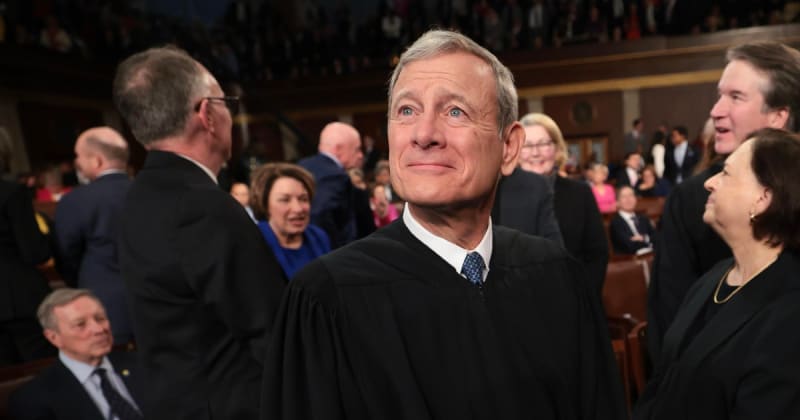
Supreme Court Chief Affirms Constitution's Resilience Amid Political Turbulence
Chief Justice John Roberts reaffirms the Constitution's strength, offering a hopeful perspective on judicial independence during politically turbulent times. His annual letter highlights the enduring principles that guide America's legal system.
In a powerful testament to American democratic principles, Chief Justice John Roberts has reaffirmed the enduring strength of the nation's founding documents, offering a beacon of hope during challenging political times.
Roberts' annual year-end letter to the judiciary echoed a century-old sentiment from President Calvin Coolidge, declaring the Constitution remains "firm and unshaken" - a phrase he emphasized as "True then; true now". The letter comes at a critical moment when judicial independence has faced unprecedented challenges, particularly during the Trump administration's contentious legal battles.
The chief justice has previously spoken out against threats to judicial independence, highlighting four key areas of concern: violence, intimidation, disinformation, and attempts to defy lawfully entered judgments. In a notable instance earlier this year, Roberts publicly rebuked President Trump after the president called for the impeachment of a judge who ruled against him in a case involving Venezuelan migrant deportations.
With characteristic precision, Roberts reminded the public that "for more than two centuries, it has been established that impeachment is not an appropriate response to disagreement concerning a judicial decision." His letter extensively referenced historical precedents, including an early 19th-century case establishing Congress's limitations on removing judges for controversial rulings.
While the Supreme Court has granted the Trump administration approximately two dozen victories on its emergency docket - including policies on transgender military service and immigration - the court has also handed the administration several defeats. Upcoming pivotal cases in 2026 include potential arguments about birthright citizenship and unilateral tariff impositions, reflecting the complex legal landscape ahead.
Roberts concluded his letter by referencing Thomas Paine's seminal 1776 pamphlet "Common Sense" and echoing Coolidge's encouragement to find solace in the Constitution and Declaration of Independence amid partisan politics. His message serves as a powerful reminder of the resilience and adaptability of American democratic institutions.
Based on reporting by CBS News
This story was written by BrightWire based on verified news reports.
Spread the positivity! 🌟
Share this good news with someone who needs it