Stunning Discovery: Mediterranean Seafloor Reveals Hidden Hydrothermal Wonderland
Scientists discover a massive, breathtaking hydrothermal vent field off Greece's Milos island, revealing unprecedented insights into underwater geological processes. This groundbreaking research illuminates how tectonic forces shape our planet's hidden marine landscapes.
Marine scientists have uncovered an extraordinary underwater landscape off the Greek island of Milos, revealing a massive hydrothermal vent field that challenges previous understanding of seafloor geological processes.
During the METEOR expedition M192, researchers conducted comprehensive surveys using cutting-edge underwater mapping technologies, autonomous vehicles, and remotely operated vehicles to explore the seafloor between 100 and 230 meters deep. The team discovered an expansive hydrothermal system that positions Milos as hosting one of the largest shallow to intermediate depth vent networks in the Mediterranean region.
The team identified three primary vent regions: Aghia Kiriaki, Paleochori-Thiorychia, and Vani. These areas are strategically positioned along active fault zones within the Milos Gulf-Fyriplaka graben, a tectonic depression where sections of the seafloor have dramatically sunk. The precise alignment between vent locations and fault systems provides compelling evidence of how tectonic forces fundamentally shape underwater geological environments.
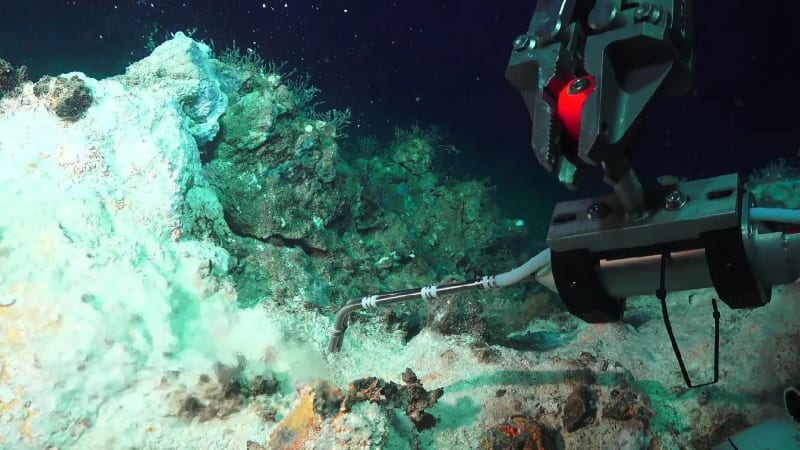
Solveig I. Bühring, senior author of the study from MARUM -- Center for Marine Environmental Sciences at the University of Bremen, expressed remarkable excitement about the discovery. 'We never expected to find such a large field of gas flares off Milos,' she explained. 'When we first observed the vents through the ROV cameras, we were stunned by their diversity and beauty -- from shimmering, boiling fluids to thick microbial mats covering the chimneys.'
First author Paraskevi Nomikou from the National and Kapodistrian University of Athens provided additional scientific context, noting that the gas flares precisely follow the island's underlying fault structure. 'Our data clearly show that different fault zones influence various vent clusters, especially where several faults intersect,' Nomikou explained. This intricate relationship highlights the complex geological dynamics driving hydrothermal activity.
The research represents a significant breakthrough for understanding Mediterranean marine geology, demonstrating how ongoing fault movements and long-term geological activities guide the formation and evolution of underwater vent fields. By revealing Milos's unique geological characteristics, scientists have uncovered a critical natural laboratory for exploring interactions between tectonics, volcanism, and hydrothermal processes.
The collaborative study involved multiple prestigious research institutions, including the National and Kapodistrian University of Athens, MARUM -- University of Bremen, Friedrich-Alexander-Universität Erlangen-Nürnberg, ICBM -- Institute for Chemistry and Biology of the Marine Environment Oldenburg, and Constructor University Bremen. Researchers are already planning follow-up expeditions to Milos, the Kolumbo submarine volcano near Santorini, and Nisyros to continue their groundbreaking investigations.
Based on reporting by Science Daily
This story was written by BrightWire based on verified news reports.