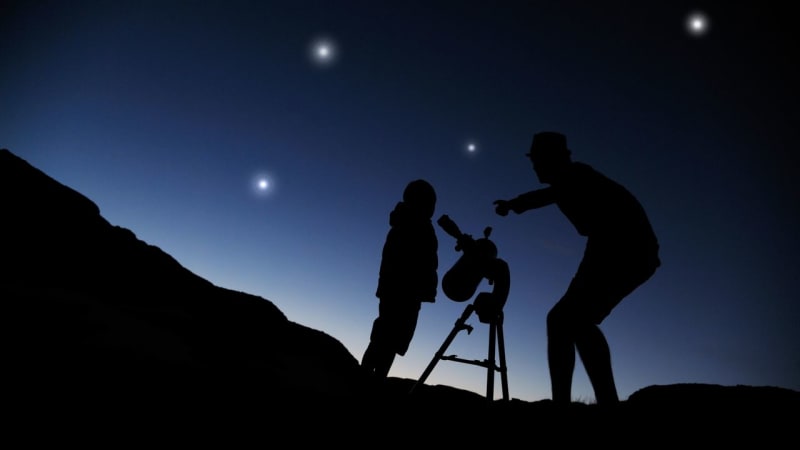
Stargazing Success: Insider Tips for First-Time Telescope Users
Unlock the secrets of successful stargazing with expert tips for first-time telescope users. Learn how to overcome common mistakes and transform your night sky observations from frustrating to fascinating.
Imagine peering through a telescope for the first time, expecting a breathtaking cosmic panorama, only to be met with frustration and blurry images. Many aspiring astronomers experience this exact moment of disappointment, but it doesn't have to be your story.
Telescope use is an art that requires preparation, patience, and understanding. Seasoned astronomers know that successful stargazing isn't about impulse, but strategic planning and realistic expectations. The night sky is a complex, dynamic environment that demands respect and knowledge.
One of the most critical mistakes beginners make is spontaneously grabbing their telescope without considering essential factors like moon phases, light pollution, and seasonal visibility. Free apps like Stellarium can be game-changers, helping users understand what celestial objects will be visible and when. By taking a few moments to check cloud forecasts and sky conditions, you can transform a potentially wasted evening into an extraordinary astronomical adventure.
Many newcomers arrive with unrealistic expectations, hoping to see the vivid, color-saturated nebulas and razor-sharp galaxies found in professional photographs. The reality is more nuanced: backyard telescopes reveal a subtler, more delicate universe. The moon's craters, Jupiter's bands, and sparkling star clusters become breathtaking when viewed through the right lens and with adjusted expectations.
Telescope selection is another crucial consideration. Not all telescopes are created equal - some excel at observing planetary details, while others are designed for capturing distant deep-space objects. Wide aperture, low focal-ratio telescopes like Dobsonians gather more light, making faint objects more visible. Conversely, longer focal length telescopes provide higher magnification, perfect for lunar and planetary observation.
A frequently overlooked but essential step is allowing your telescope to acclimate to outdoor temperatures. Removing a scope from a warm indoor environment directly into cold night air creates turbulent air currents that blur your view. Giving your telescope 20-40 minutes to stabilize can dramatically improve image clarity, allowing planets to snap into focus and lunar details to emerge with crisp definition.
Contrary to popular belief, more magnification doesn't guarantee better views. Each telescope has a maximum useful magnification, and pushing beyond that results in dim, unstable images. Understanding your equipment's limitations and strengths is key to a rewarding stargazing experience.
For those truly passionate about capturing celestial wonders, consider investing in astrophotography cameras or smart telescopes. These tools can help bridge the gap between visual observation and the stunning images that initially inspired your astronomical journey. Remember, the universe is vast and miraculous - patience and preparation are your greatest tools for exploration.
Based on reporting by Live Science
This story was written by BrightWire based on verified news reports.
More Good News
 🚀 Innovation
Electrifying Deal: Dodge Charger EV Slashes Prices by Nearly 50%
 🚀 Innovation
CATL's Sodium-Ion Battery Revolution: A Breakthrough in Electric Vehicle Technology
 🚀 Innovation
Home Tech Revolution: 5 Breakthrough Innovations That Are Changing Everyday Living
Start Your Day With Good News
Join 50,000+ readers who wake up to stories that inspire. Delivered fresh every morning.
No spam, ever. Unsubscribe anytime.