Space Cleanup Revolution: Sci-Fi Tractor Beam Could Solve Orbital Debris Crisis
Scientists are developing an innovative 'electrostatic tractor beam' to safely remove dangerous space debris from Earth's orbit. This groundbreaking technology could revolutionize how we manage satellites and prevent potential catastrophic collisions.
Imagine a technology straight out of science fiction that could clean up Earth's increasingly cluttered orbital neighborhood. Scientists at the University of Colorado Boulder are turning that dream into reality with an innovative 'electrostatic tractor beam' designed to safely remove dangerous space debris and prevent potential catastrophic satellite collisions.
The concept emerged from a groundbreaking moment of inspiration following a major satellite collision in 2009, when an active communications satellite, Iridium 33, dramatically crashed into a defunct Russian military spacecraft, Kosmos 2251, scattering over 1,800 pieces of debris into Earth's orbit. Professor Hanspeter Schaub, an aerospace engineering expert, was determined to develop a solution that could prevent such destructive incidents in the future.
The proposed tractor beam represents a remarkable technological breakthrough that could help manage the growing challenge of space junk. With the commercial space industry experiencing unprecedented growth, experts predict a sharp increase in satellite numbers, which could potentially transform Earth's orbit into a hazardous metal graveyard. These accumulated fragments pose significant risks, including potential damage to functioning spacecraft, atmospheric pollution, and obstruction of astronomical observations.
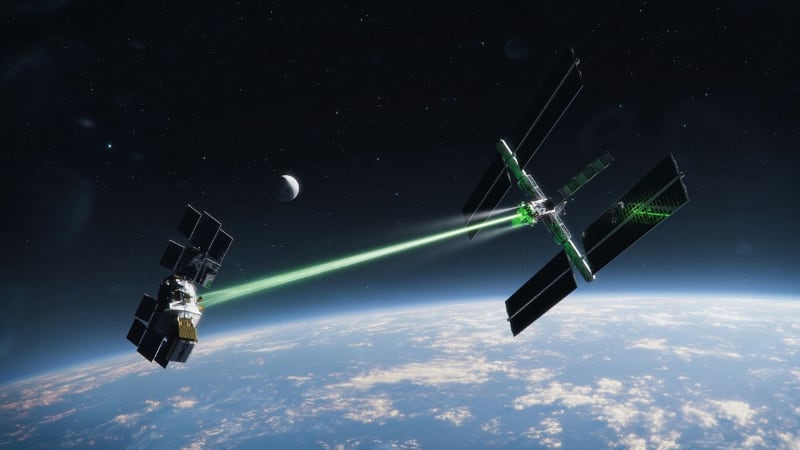
How exactly would this futuristic technology work? The electrostatic tractor beam involves a specialized servicer spacecraft equipped with an electron gun that would strategically charge target satellites. By firing negatively charged electrons at a dead satellite, the servicer creates an electrostatic attraction that can maintain a connection despite being separated by 65 to 100 feet. This ingenious method would allow the servicer to gently maneuver defunct satellites away from critical orbital zones, particularly the valuable geostationary orbit.
Doctoral student Kaylee Champion, a key researcher on the project, candidly acknowledges the primary challenge: "The science is pretty much there, but the funding is not." While a prototype could cost millions and a full operational system even more, the team remains optimistic that their innovative solution could be implemented within the next decade. The potential benefits for space exploration and satellite management are immense, offering a promising solution to a growing technological challenge.
Unlike the dramatic tractor beams depicted in science fiction movies like 'Star Wars' and 'Star Trek', which imagined impossible energy fields capturing entire spaceships, this real-world version is grounded in practical physics. It represents a collaborative effort to responsibly manage humanity's expanding presence in space, ensuring that our technological progress doesn't come at the cost of creating an orbital waste management crisis.
As commercial space activities continue to accelerate, technologies like the electrostatic tractor beam could become critical infrastructure for maintaining safe, accessible orbital pathways. By developing proactive solutions to space debris, scientists are not just solving a technical problem, but protecting our collective future in space exploration.
Based on reporting by Live Science
This story was written by BrightWire based on verified news reports.
More Good News
 🚀 Innovation
Chinese Car Brands Rev Up: One in Ten UK Cars to Be Made in China by 2025
 🚀 Innovation
World Cup 2026: A Landmark Tournament That Breaks New Ground in Soccer History
 🚀 Innovation