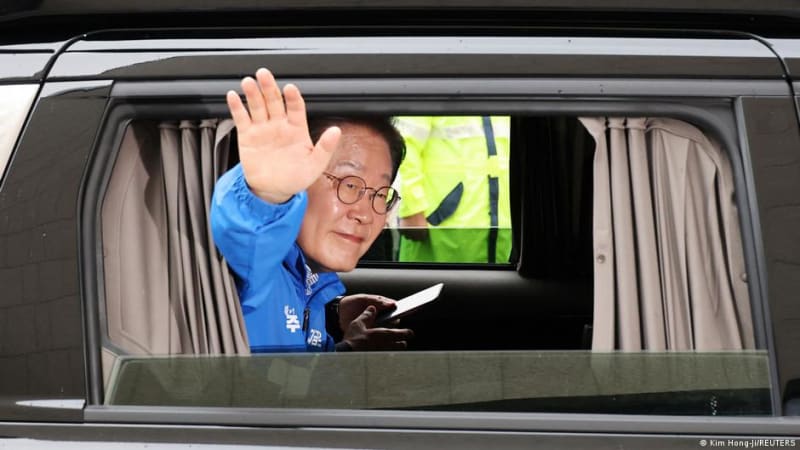
South Korea's New President Charts Peaceful Path to North Korean Dialogue
South Korean President Lee Jae Myung is transforming inter-Korean relations through innovative diplomatic strategies focused on dialogue and cultural exchange. His approach marks a significant departure from previous hardline policies, offering a path toward peaceful coexistence.
In a remarkable diplomatic pivot, South Korean President Lee Jae Myung is rewriting the playbook for inter-Korean relations, offering unprecedented olive branches to Pyongyang after years of heightened tensions.
The Korean Peninsula, divided since 1948, has long been a geopolitical powder keg. But Lee's first seven months in office signal a dramatic shift from his predecessor Yoon Suk Yeol's hardline approach, focusing instead on dialogue, cultural exchange, and gradual confidence-building measures.
Experts like Professor Choo Jae-woo from Kyung Hee University note that while both leaders ultimately seek stability, Lee has strategically repositioned denuclearization from a pre-condition to an 'eventual goal'. This nuanced approach prioritizes immediate peaceful coexistence and reopening communication channels that have been frozen since North Korea's last nuclear test in September 2017.
Lee's diplomatic initiatives are wide-ranging and innovative. He has reinstated the North Korea policy office to facilitate military dialogue, suggested lifting long-standing sanctions, and even proposed that South Koreans could travel to North Korea via China. The government has also lifted restrictions on North Korean newspapers like Rodong Sinmun, allowing cross-border media access.
Cultural diplomacy plays a key role in Lee's strategy. He wants to revive a 2018 proposal for a joint UNESCO application recognizing taekwondo as shared Intangible Cultural Heritage. Additionally, he has created a new peace envoy position dedicated to discovering fresh diplomatic pathways and has even requested UN Secretary-General Antonio Guterres to visit North Korea and help break the diplomatic stalemate.
Military de-escalation is another critical component of Lee's approach. Analysts have noted a reduction in South Korean military drills planned for 2025, addressing Pyongyang's long-standing concern that such exercises simulate potential invasion scenarios. Minister of Unification Chung Dong-young has explicitly advocated for decreased military posturing in favor of diplomatic engagement.
While challenges remain significant, Lee's multi-pronged strategy represents a hopeful approach to one of the world's most complex geopolitical relationships. By emphasizing dialogue, cultural connection, and incremental trust-building, South Korea is demonstrating that peaceful resolution is possible, even in seemingly intractable conflicts.
Based on reporting by DW News
This story was written by BrightWire based on verified news reports.
Spread the positivity! 🌟
Share this good news with someone who needs it
More Good News
 💡 Solutions
Trump's Diplomatic Gambit: How a Border Corridor Could Reshape Caucasus Peace
 💡 Solutions
Chinese-American Leader Bridges US-China Tensions with Innovative Diplomacy
 💡 Solutions