Scientists Unravel Dark Matter Mystery Through Fusion Reactor Research
Groundbreaking research reveals potential method for producing dark matter particles in fusion reactors, bridging theoretical physics and popular culture. Scientists explore innovative approaches to understanding the universe's mysterious unseen matter.
In a breakthrough that bridges theoretical physics and popular culture, researchers have uncovered a potential method for producing elusive dark matter particles inside fusion reactors - a challenge that even the beloved fictional physicists from 'The Big Bang Theory' could not solve.
University of Cincinnati physicist Jure Zupan and an international team of collaborators have published groundbreaking research in the Journal of High Energy Physics, proposing a novel approach to creating axions, theoretical subatomic particles believed to be crucial in understanding dark matter's composition. Their work not only advances scientific understanding but also playfully references a memorable subplot from the iconic CBS sitcom that ran from 2007 to 2019.
Axions represent a potential key to unlocking the mysteries of dark matter, a substance that comprises most of the universe's matter yet remains undetectable through traditional means. While ordinary matter - including stars, planets, and living beings - accounts for only a small fraction of cosmic material, dark matter's gravitational influence shapes the universe's fundamental structure since the Big Bang nearly 14 billion years ago.
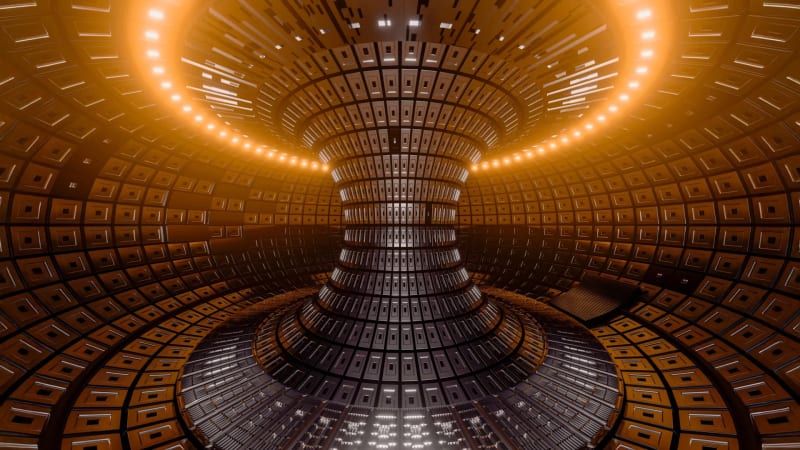
The research focuses on a specific fusion reactor design utilizing deuterium and tritium fuel within a lithium-lined vessel, currently being developed through an international collaboration in southern France. Zupan explained that neutrons generated in this reactor could potentially create particles linked to the mysterious 'dark sector' through complex nuclear interactions and energy release mechanisms.
Drawing an amusing connection to popular science entertainment, Zupan noted how 'The Big Bang Theory' had previously explored similar theoretical concepts. The show's white boards occasionally featured equations related to axion production, with one memorable scene depicting a sad face marker indicating theoretical failure - a visual gag that resonated with scientific audiences.
While the chances of detecting axions from fusion reactors remain lower compared to solar production, the researchers believe alternative processes could still yield fascinating results. 'The sun is a huge object producing immense power,' Zupan explained, 'which increases the likelihood of new particle streams reaching Earth. However, fusion reactors offer alternative pathways for potential discovery.'
This research represents an exciting frontier in particle physics, demonstrating how scientific curiosity, collaborative research, and even popular media can intersect to push the boundaries of human knowledge about the universe's fundamental structures.
Based on reporting by Science Daily
This story was written by BrightWire based on verified news reports.
More Good News



Start Your Day With Good News
Join 50,000+ readers who wake up to stories that inspire. Delivered fresh every morning.
No spam, ever. Unsubscribe anytime.