Scientists Uncover Mysterious Disappearance of Ocean's Crucial 'Bone Devourers'
Scientists discover a puzzling absence of crucial 'zombie worms' in deep-sea experiments, revealing potential massive shifts in marine ecosystems. The findings highlight the delicate balance of underwater life and the complex challenges facing marine biodiversity.
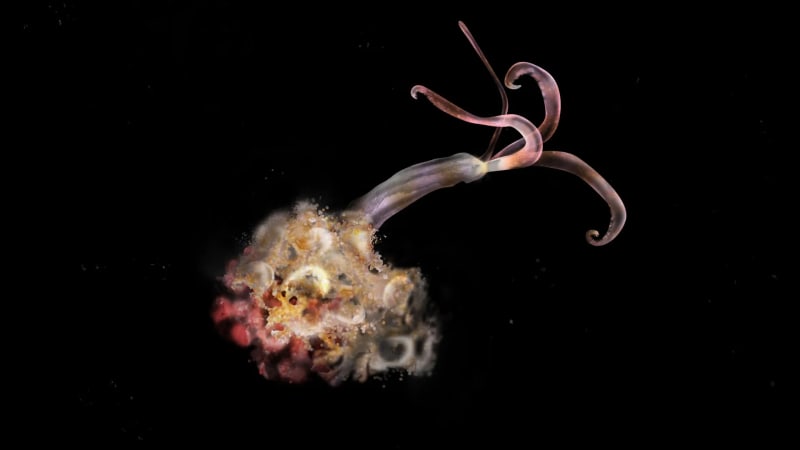
Deep beneath the Pacific Ocean's surface, a critical marine mystery is unfolding that could signal significant ecological shifts. Researchers from Ocean Networks Canada have discovered an alarming absence of zombie worms – scientifically known as Osedax or 'bone devourers' – in a decade-long deep-sea experiment that may reveal profound changes in marine ecosystems.
Led by senior scientist Fabio De Leo from the University of Victoria, the study involved placing humpback whale bones on the ocean floor near Barkley Canyon, nearly a thousand meters underwater. After years of careful monitoring, researchers found no trace of these extraordinary creatures that play a vital role in marine nutrient cycling, sparking concerns about potential long-term environmental transformations.
Zombie worms represent a biological marvel, surviving without a traditional digestive system by drilling root-like structures into bones and hosting specialized microbes that extract nutrients. Their unique ecological role makes them 'ecosystem engineers' – organisms that create and modify habitats for other marine species. The absence of these creatures could trigger a significant chain reaction in deep-sea biodiversity, potentially disrupting complex marine food webs.
The study suggests that expanding oxygen minimum zones in the northeast Pacific might be responsible for this concerning trend. Low oxygen levels appear to be creating inhospitable environments for zombie worms and other marine species, potentially threatening the delicate balance of underwater ecosystems. "Basically, we're talking about potential species loss," De Leo explained, highlighting the broader implications of this discovery.
Whale falls – the natural phenomenon of whale carcasses sinking to the ocean floor – typically serve as critical habitats for numerous marine organisms. De Leo describes these sites as "almost like islands" and "stepping-stone habitats" for specialized species. The lack of zombie worms could severely impact these unique ecosystems, potentially reducing connectivity between marine habitats and threatening the diversity of deep-sea species.
The research team also observed reduced colonization rates for wood-boring Xylophaga bivalves, suggesting that multiple marine species might be experiencing similar environmental pressures. This broader pattern indicates that the challenges facing zombie worms could be part of a more extensive ecological shift potentially linked to climate change and changing ocean conditions.
While the findings are concerning, they represent a crucial scientific breakthrough in understanding marine ecosystem dynamics. By documenting these changes, researchers are providing valuable insights that could help develop conservation strategies and better understand the complex interactions within our planet's oceanic environments.
Based on reporting by Science Daily
This story was written by BrightWire based on verified news reports.
More Good News
 🚀 Innovation
Smart Savings: How a $40,000 CD Could Boost Your Financial Future in 2026
 🚀 Innovation
Trina Solar Transfers 5-Gigawatt Solar Module Factory to T1 Energy, Signaling US Manufacturing Renaissance
 🚀 Innovation
Kenya's Digital Financial Revolution: How Mobile Money Transformed a Nation
Start Your Day With Good News
Join 50,000+ readers who wake up to stories that inspire. Delivered fresh every morning.
No spam, ever. Unsubscribe anytime.