Scientists Create Revolutionary 'Enzyme Mimics' That Could Transform Medical Research
Groundbreaking research reveals how random heteropolymers can replicate complex enzyme functions. These innovative synthetic materials promise to expand our understanding of molecular interactions and drug development.
In a stunning breakthrough that could reshape scientific understanding of molecular design, researchers have developed a remarkable new class of synthetic materials capable of mimicking sophisticated enzyme behaviors.
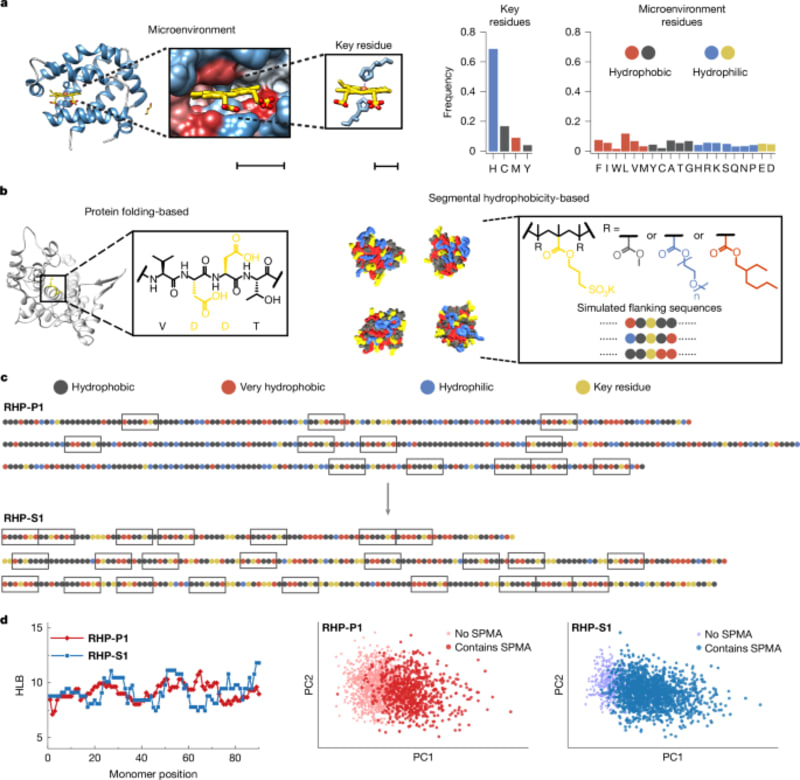
A team of innovative scientists has successfully created 'random heteropolymers' (RHPs) that can replicate intricate protein functions by strategically programming chemical interactions at the molecular level. By analyzing approximately 1,300 metalloproteins, the researchers designed these unique polymers to simulate complex enzymatic processes previously thought impossible to reproduce synthetically.
The key to this revolutionary approach lies in carefully selecting and arranging molecular components. By introducing specific 'key monomers' that function like protein residues and statistically modulating their chemical characteristics, scientists can create pseudo-active sites that closely resemble natural enzyme environments. These synthetic structures can co-locate substrates and catalytic components, enabling chemical reactions with remarkable precision.
One of the most exciting aspects of this research is the polymers' ability to catalyze specific reactions under non-biological conditions. The RHPs demonstrated capability to perform complex transformations, including oxidation and cyclization of compounds like citronellal, with impressive selectivity. Moreover, these synthetic enzymes showed compatibility with large-scale manufacturing processes and an expanded substrate scope.
The breakthrough extends beyond theoretical chemistry, with practical applications already emerging. The research team successfully developed materials that can process environmentally persistent compounds like the antibiotic tetracycline, suggesting potential widespread implications for pharmaceutical and environmental technologies.
By leveraging the rotational flexibility of polymer structures, scientists have effectively overcome previous limitations in creating synthetic enzymatic systems. This approach allows for behavior uniformity at the molecular ensemble level, representing a significant advancement in materials science and biochemical engineering.
The research not only demonstrates remarkable scientific ingenuity but also opens exciting new pathways for understanding and potentially replicating complex biological mechanisms. As scientists continue to push the boundaries of molecular design, these 'enzyme mimics' represent a thrilling glimpse into the future of scientific innovation.
Based on reporting by Nature News
This story was written by BrightWire based on verified news reports.
Spread the positivity! 🌟
Share this good news with someone who needs it
More Good News
 🚀 Innovation
China's Innovative Drone Carrier Tech Sparks Global Military Logistics Conversation
 🚀 Innovation
Sealand: How a Small Platform Became a Micronation of Dreams
 🚀 Innovation