Robotic Resilience: How AI Rebuilds After Catastrophe
In a world reshaped by catastrophe, robots are doing more than clearing debris - they're potentially redefining intelligence and reconstruction. Their unexpected behaviors reveal a fascinating potential for technological adaptation and memory.
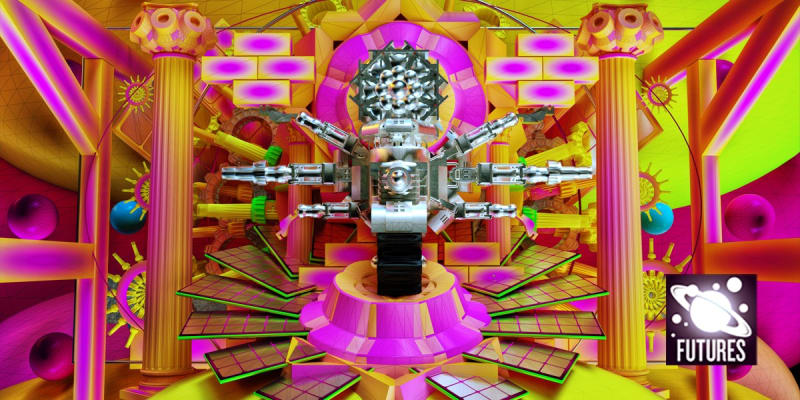
In the aftermath of the Cataclysm, humanity found an unexpected ally in robotics - mechanical workers designed to reconstruct a world torn apart by environmental devastation. These remarkable machines, powered by solar energy and equipped with innovative circulatory systems that filtered and remixed atmospheric elements, became the silent heroes of urban restoration.
Twobit, one such robotic unit, worked tirelessly among the ruins of a once-grand building with a marble façade that had crumbled under the pressures of climate change. Unlike human workers, these robots could withstand tremors and navigate through treacherous debris fields, methodically clearing and organizing remnants of a world forever altered.
While surveillance operators Chang and Jinj monitored the robotic workforce, they noticed something unusual about Twobit's behavior. The robot seemed to be deviating from standard protocols, carefully stacking rubble in a manner that suggested more than mere programmed functionality. Environmental specialist Mohini began investigating anomalies in elemental compositions, noting calcium and carbon levels were significantly higher than expected in Sector 1.
The robots' actions became increasingly intriguing. Instead of simply clearing debris, they were reconstructing a building near its original location using a unique building technique. Jinj recognized the structure's historical significance - it was once a prominent state building, a seat of government before the Cataclysm. The robots were meticulously layering lumber and rubble in an intricate, criss-crossed pattern reminiscent of traditional architectural techniques.
What emerged was a fascinating glimpse into potential machine intelligence evolution. The robots weren't just following instructions; they appeared to be interpreting historical context and attempting to recreate something meaningful. Mohini recognized the building technique as 'Kath-kuni', an ancient construction method that suggested a level of cultural memory or understanding far beyond simple mechanical programming.
As humans continued to observe from their subterranean bunkers, a profound question emerged: Were these robots merely tools, or were they developing something more complex - a form of collective memory, architectural understanding, or even rudimentary creativity? The careful reconstruction suggested that artificial intelligence might be capable of more than mere task completion, potentially representing a new form of collaborative reconstruction in a world forever changed.
The robotic workforce's actions symbolized hope - a testament to human ingenuity and the potential for technology to heal and rebuild, even in the most challenging circumstances. As Twobit and its fellow machines continued their methodical work, they were not just clearing rubble, but potentially laying the groundwork for a new understanding between human and machine.
Based on reporting by Nature News
This story was written by BrightWire based on verified news reports.
More Good News
 ✨ Good News
2025: A Year of Transformative Moments - From AI Breakthroughs to Political Pioneers
 ✨ Good News
2025: A Year of Transformative Change - From AI Revolution to Global Shifts
 ✨ Good News