Ocean's Hidden Heroes: How Mid-Sized Fish Connect Underwater Ecosystems
Scientists discover how mid-sized fish serve as critical connectors in ocean ecosystems, bridging the gap between surface and deep-sea environments. This groundbreaking research reveals the complex migration patterns and ecological importance of previously overlooked marine species.
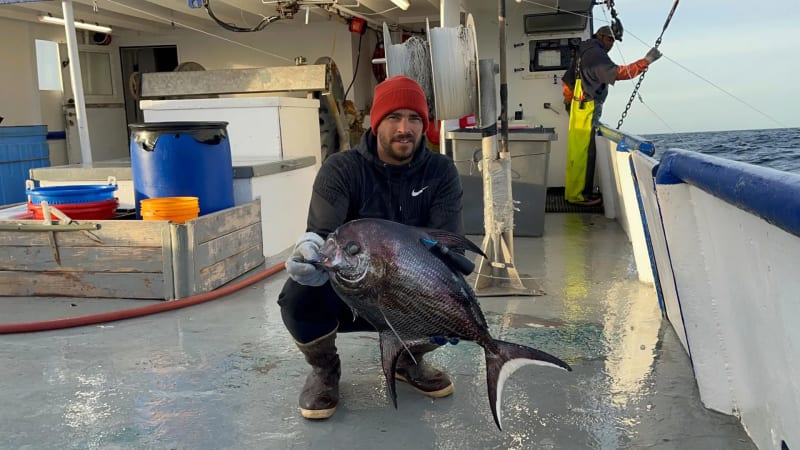
In the mysterious depths of our planet's oceans, a groundbreaking discovery is shedding light on the intricate connections that sustain marine life. Scientists from the Woods Hole Oceanographic Institution (WHOI) have uncovered fascinating insights into how mid-sized fish like the bigscale pomfret serve as crucial ecological bridges between the ocean's surface and its deepest, darkest regions.
The mesopelagic zone, a dim underwater realm stretching from 200 to 1,000 meters beneath the surface, has long puzzled marine researchers. Despite containing more living biomass than any other ocean layer, this twilight zone seemed an unlikely habitat for larger predators. However, new research published in Marine Ecology Progress Series reveals a complex and interconnected ecosystem that challenges previous scientific understanding.
Using innovative satellite-based tracking technology, researchers led by Martin Arostegui tracked the movements of bigscale pomfret, revealing remarkable migration patterns that demonstrate these fish are permanent residents of the ocean's twilight zone. The data showed a consistent daily rhythm: these fish remain deep during daylight hours and move to shallower waters to feed at night, creating a critical link between different marine environments.
The study's success relied on an unexpected partnership between scientific researchers and commercial fishing. Captain Danny Mears and his crew played a pivotal role, using their professional fishing equipment to help tag and track these elusive mid-sized fish. Mears expressed enthusiasm about the project, noting the fascinating nature of bigscale pomfret and his crew's excitement about contributing to scientific understanding.
Environmental conditions emerged as another crucial factor in the fish's behavior. When the bigscale pomfret traveled from the Slope Sea to the clearer Sargasso Sea, researchers observed significant shifts in migration patterns. Water clarity appeared to influence their swimming depths, potentially affecting their hunting strategies and exposure to predators like large sharks.
WHOI biologist Camrin Braun, the study's senior author, emphasized the importance of these often-overlooked species. 'We've been treating the mesopelagic layer like a massive buffet for large predators while ignoring the critical middle players,' Braun explained. 'These mid-sized fish are essentially doing the hard work of connecting deep ocean ecosystems to surface food webs. Without understanding them, we're attempting to solve an ecological puzzle with crucial pieces missing.'
The research represents a significant breakthrough in marine ecology, highlighting how seemingly minor species play outsized roles in maintaining complex underwater food webs. By revealing the intricate connections between different ocean layers and predator species, scientists are developing a more nuanced understanding of marine ecosystems' delicate balance and interdependence.
Based on reporting by Science Daily
This story was written by BrightWire based on verified news reports.
More Good News



Start Your Day With Good News
Join 50,000+ readers who wake up to stories that inspire. Delivered fresh every morning.
No spam, ever. Unsubscribe anytime.