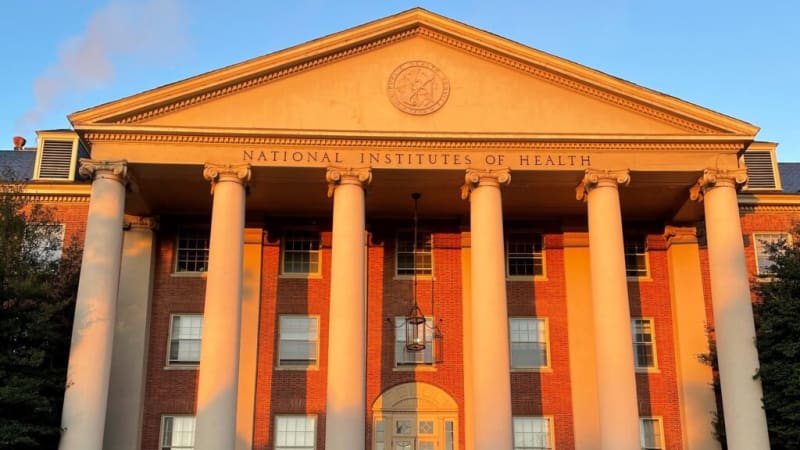
NIH Grant Lawsuit Breakthrough: Researchers Gain Hope as Review Process Reopens
The Trump administration has reached a landmark agreement to review previously frozen NIH grants, offering researchers a path forward after controversial DEI-related terminations. The settlement represents a significant victory for scientific research integrity and institutional fairness.
In a significant victory for scientific research and institutional fairness, the Trump administration has agreed to comprehensively review previously frozen National Institutes of Health (NIH) grant submissions, offering renewed optimism for researchers whose projects were abruptly halted.
The landmark agreement, filed in the federal District Court of Massachusetts, represents a critical turning point for thousands of research grants that were caught in bureaucratic limbo due to controversial directives targeting diversity, equity, and inclusion (DEI) initiatives. State attorneys general and union representatives who brought the lawsuit celebrated the decision as a meaningful step toward protecting academic research integrity.
Under the detailed settlement, the NIH will systematically review grant applications that were previously frozen, denied, or withdrawn. Critically, the review will be conducted through standard scientific evaluation processes rather than politically motivated directives. Researchers with continuing grant renewal applications will receive decisions by the agreement's filing date, while new award applications will be processed by mid-January and mid-April, depending on their review stage.
Federal judge William G. Young's previous ruling significantly influenced this outcome, determining that the original terminations were likely illegal under the Administrative Procedures Act. The Supreme Court's subsequent guidance, which suggested individual researchers could pursue claims in federal court, further complicated the landscape.
Jeremy Berg, a prominent former NIH institute leader and vocal critic of the administration's approach, expressed cautious optimism about the settlement. "This is the best possible scenario for these applications," Berg noted in a social media post, acknowledging that meaningful damage had already been done while appreciating the collaborative effort to rectify the situation.
Moving forward, researchers should anticipate heightened scrutiny of grant proposals, with NIH program officers likely implementing more stringent alignment checks with current administrative priorities. While the agreement does not guarantee funding for any specific application, it represents a critical restoration of professional scientific evaluation processes.
This resolution underscores the importance of institutional checks and balances, demonstrating how legal challenges and collaborative advocacy can protect scientific research from potentially arbitrary administrative interventions. Researchers, universities, and scientific institutions can view this outcome as a testament to the power of persistent, principled opposition to policies that threaten academic independence.
Based on reporting by STAT News
This story was written by BrightWire based on verified news reports.
More Good News
 💡 Solutions
Bulgaria Embraces the Euro: A Milestone in Economic Integration
 💡 Solutions
China's Consumer-Boosting Trade-In Program Expands to Embrace Smart Technology and Upgrade National Infrastructure
 💡 Solutions