Nature's Resilience: How California's Birds Adapt to Wildfire's Transformative Power
California's birds are revealing surprising resilience in the face of increasing wildfires, with many species not just surviving but potentially thriving in post-fire landscapes. A groundbreaking 35-year study shows how fire can create new habitats and food sources for numerous bird species.
Deep in California's Sierra Nevada forests, a remarkable story of survival and renewal unfolds through the unexpected hero of wildfire ecology: the black-backed woodpecker. With rhythmic precision, these birds tap-tap-tap into charred tree trunks, their specialized bills revealing a fascinating relationship between wildlife and fire that challenges traditional understanding.
Ornithologist Morgan Tingley from UCLA has been studying this intricate dance between birds and flames, uncovering surprising insights into how avian species not only survive but potentially thrive in post-fire landscapes. "While it's ephemeral, it's a native habitat of California that many species rely on and have evolved with over millions of years," Tingley explains, highlighting the complex ecological dynamics at play.
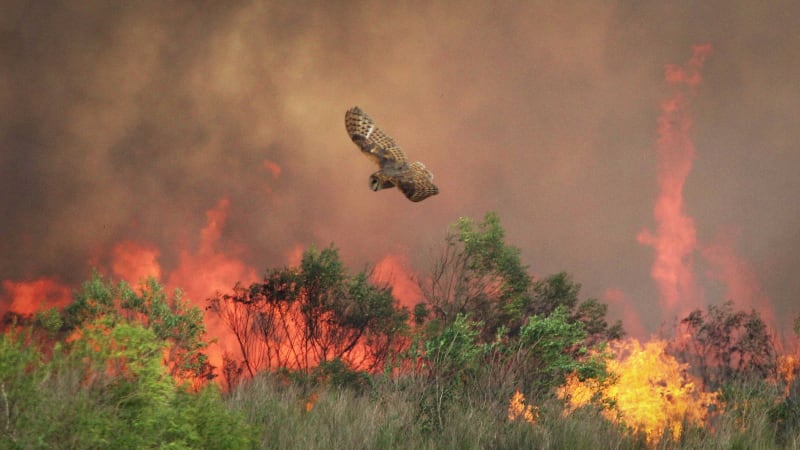
California's wildfire landscape has dramatically transformed in recent decades. Over the past ten years, fires have scorched more than 5.3 million hectares, with 2020 alone witnessing over 1.6 million hectares burned—a stark contrast to the yearly average of just 110,500 hectares between 1989 and 1998. Scientists are now diving deep into understanding how these increasingly intense fires impact bird populations.
A groundbreaking study published in Fire Ecology offers unprecedented insights. Researchers analyzed 35 years of bird monitoring data from Yosemite and Sequoia National Parks, tracking 42 bird species ranging from mountain quails to northern flickers. Lead author Chris Ray from the Institute for Bird Populations was astonished by the findings: many bird species not only survived but flourished in burned areas.
The research revealed remarkable resilience. Of the 42 studied species, 21 demonstrated positive responses to fire that persisted for over two decades. Bird population density actually increased rapidly after fires and remained higher in burned areas for at least 35 years. Moderate-severity fires, in particular, produced the most immediate and enduring positive effects.
Interestingly, only one species—the black-headed grosbeak—consistently responded negatively to fire. For most birds, burned landscapes offer unexpected opportunities: fallen trees create new habitats, while post-fire vegetation growth generates abundant food sources. "Fire is, in some senses, devastating. And in other senses, rejuvenating," Ray eloquently notes, capturing the transformative power of natural cycles.
As climate change continues to reshape California's ecosystems, understanding these complex interactions becomes increasingly crucial. The black-backed woodpecker—thriving amid charred forests, feasting on bark beetles, and drilling into fire-transformed landscapes—serves as a powerful symbol of nature's incredible adaptability and resilience.
Based on reporting by Mongabay
This story was written by BrightWire based on verified news reports.
Spread the positivity! 🌟
Share this good news with someone who needs it