Nature's Masterminds: How Orcas Are Revealing Extraordinary Intelligence
Orcas are revealing extraordinary intelligence through unprecedented hunting behaviors and social learning. Their complex cognitive abilities are challenging scientific understanding of marine mammal intelligence.
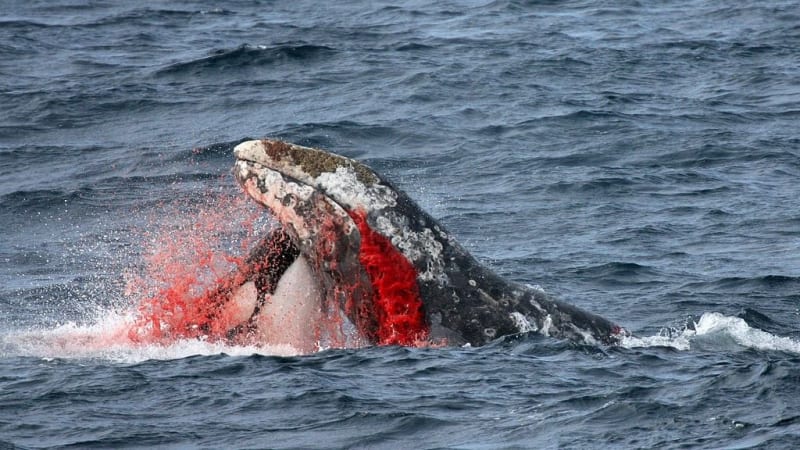
In the vast blue expanses of our planet's oceans, a remarkable story of animal intelligence is unfolding - and it centers on one of the most fascinating predators on Earth: the orca. In March 2019, marine researchers witnessed an unprecedented event off the coast of southwestern Australia that would challenge everything we thought we knew about these incredible marine mammals: a dozen orcas systematically hunting and killing an adult blue whale, consuming huge chunks of its flesh in a coordinated, strategic attack.
This groundbreaking incident marked the first-ever documented case of orcas preying on blue whales, but it was far from an isolated event. Subsequent observations have revealed even more extraordinary behaviors, including orcas abducting baby pilot whales and meticulously extracting sharks' livers, while a specific population near Spain and Portugal has begun intentionally ramming and sinking boats.
According to leading orca researcher Deborah Giles from the University of Washington, these behaviors highlight the species' extraordinary cognitive capabilities. 'These are animals with an incredibly complex and highly evolved brain,' Giles explained, noting that certain brain regions associated with memory and emotion are actually more developed in orcas than in humans.
Marine ecologist Josh McInnes from the University of British Columbia cautions against assuming rapid anatomical brain changes, explaining that meaningful neurological evolution typically occurs over thousands of years. However, orcas' remarkable capacity for social learning means they can quickly adapt and teach each other sophisticated hunting and survival techniques within a single generation.
The blue whale hunting strategy, for instance, represents a remarkable example of collective learning. Marine mammal expert Robert Pitman observed that taking down such massive prey requires exceptional cooperation and coordination. He suggests these skills may have emerged in response to whale population recoveries, with knowledge transmitted from dominant females to their offspring.
Environmental shifts and increased human interaction are likely accelerating these behavioral adaptations. As marine ecosystems transform, orcas must rapidly develop new strategies to survive, relying heavily on their sophisticated social learning mechanisms. What might appear as terrifying new behaviors could actually be long-standing habits that humans are only now documenting with advanced research techniques.
While some might find these developments unsettling, they represent a testament to the incredible intelligence and adaptability of orcas. These marine mammals continue to surprise scientists, revealing layers of complexity that challenge our understanding of animal cognition and social structures. Far from being simple predators, orcas emerge as nuanced, learning creatures with remarkable potential for innovation and survival.
Based on reporting by Live Science
This story was written by BrightWire based on verified news reports.
More Good News
 🚀 Innovation
Trip.com Pioneers Stablecoin Travel Payments in Global Markets
 🚀 Innovation
Novo Nordisk's Strategic Move: Affordable Weight Loss Medication Enters Market
 🚀 Innovation
Revolutionary MIT Breakthrough Could Reverse Age-Related Immune Decline
Start Your Day With Good News
Join 50,000+ readers who wake up to stories that inspire. Delivered fresh every morning.
No spam, ever. Unsubscribe anytime.