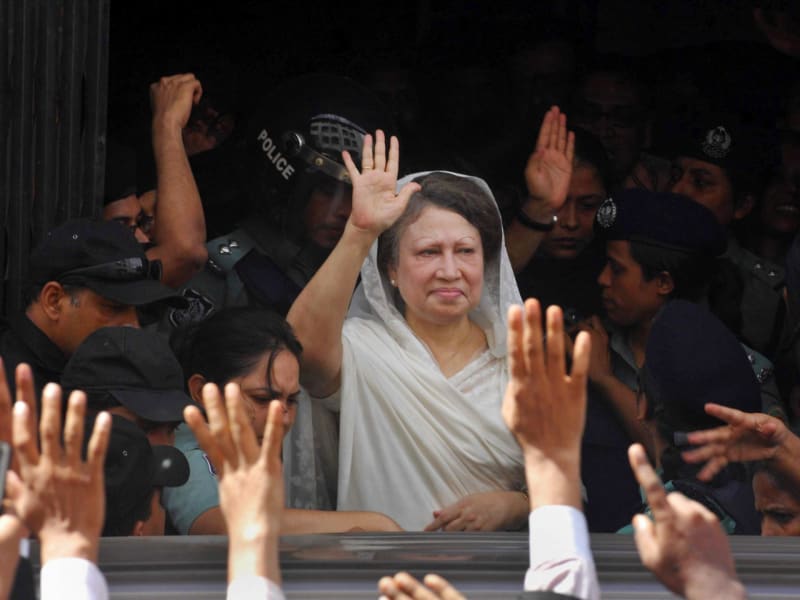
Khaleda Zia: A Pioneer of Bangladeshi Democracy Who Transformed National Politics
Khaleda Zia, Bangladesh's pioneering first woman prime minister, transformed national politics through remarkable resilience. Her journey from personal tragedy to political leadership inspired millions and reshaped the country's democratic landscape.
On a crisp December morning, grassroots activist Tipu Sultan stood outside Dhaka's Evercare Hospital, his heartfelt plea captured on a handwritten placard: "I want to donate my kidney to Begum Khaleda Zia." His profound devotion symbolized the deep emotional connection millions of Bangladeshis felt toward the country's first woman prime minister, who had just passed away at 80.
Khaleda Zia's remarkable journey from a grieving widow to a powerful political leader epitomized resilience in the face of tremendous personal and national challenges. Born on August 15, 1946, in Dinajpur during British India's final years, she emerged as a transformative figure who would reshape Bangladesh's political landscape through decades of struggle and determination.
Her political ascendancy was dramatically triggered by tragedy: the 1981 assassination of her husband, President Ziaur Rahman, in a military mutiny in Chattogram. Despite having no prior political experience, senior Bangladesh Nationalist Party (BNP) leaders recognized her unique potential to unify the party and preserve her husband's revolutionary legacy. Within months of his death, she joined the BNP as a general member in January 1982, quickly rising to vice chair in 1983 and party chairperson by August 1984.
The political environment Khaleda navigated was treacherous. When army chief Hussain Muhammad Ershad seized power in a bloodless coup in March 1982, imposing martial law, she became a central civilian figure challenging hardline military rule. Her uncompromising opposition style – characterized by election boycotts and sustained street movements – inspired intense loyalty among supporters while simultaneously drawing criticism from political opponents.
Throughout her career, Khaleda was part of a remarkable political dynamic with her longtime rival, Sheikh Hasina. Together, they were dubbed the 'battling begums', a term reflecting their significant influence in a traditionally male-dominated political sphere. While both fought against authoritarianism, Khaleda distinguished herself by never being accused of mass atrocities against critics – a nuanced legacy that reflected her complex political persona.
Even in her final days, Khaleda remained a powerful symbol of democratic resistance. Supporters like Tipu Sultan embodied her enduring impact, with him declaring emotionally, "She is like my mother. She sacrificed everything for democracy." Her death on December 30 marked the end of an extraordinary chapter in Bangladesh's political history – a journey from personal tragedy to national leadership that inspired generations.
Khaleda Zia's life was a testament to individual resilience and political transformation. From a government girls' school student in Dinajpur to becoming the nation's first woman prime minister, she navigated complex political landscapes with unwavering determination. Her legacy transcends simple political categorization, representing a nuanced narrative of struggle, leadership, and profound national change.
Based on reporting by Al Jazeera
This story was written by BrightWire based on verified news reports.
More Good News
 🦸 Heroes
Breaking Barriers: First Woman Archbishop Brings Collaborative Vision to Church of England
 🦸 Heroes
Idris Elba Receives Knighthood for Inspiring Youth Empowerment and Social Change
 🦸 Heroes