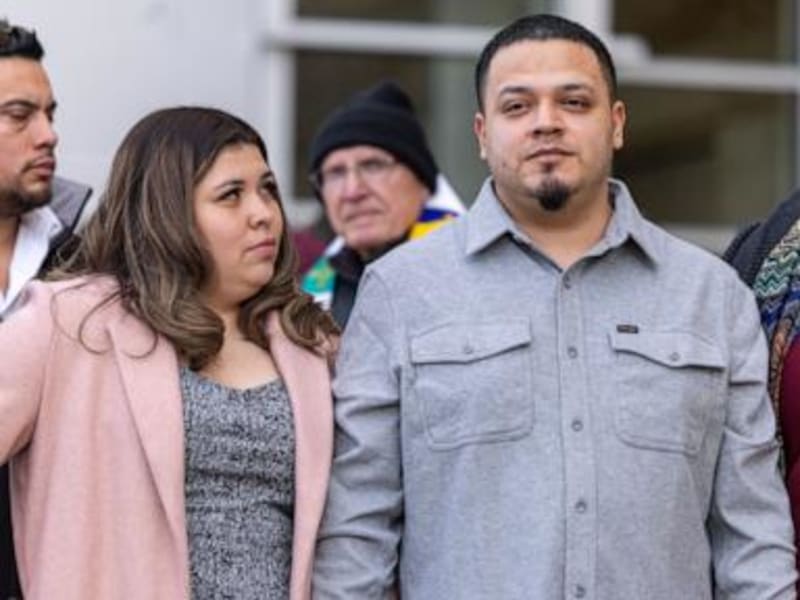
Justice Department Documents Reveal Potential Bias in High-Profile Immigration Case
A federal judge has uncovered evidence suggesting potential improper motivations in the prosecution of Kilmar Abrego Garcia. New court documents raise questions about the decision-making process behind his criminal charges.
In a surprising legal development, documents unsealed by U.S. District Judge Waverly Crenshaw have revealed potential high-level interference in the prosecution of Kilmar Abrego Garcia, an immigrant who was unexpectedly deported and then brought back to face criminal charges.
The case centers around Abrego Garcia, a Maryland resident who was deported to El Salvador's CECOT mega-prison in March, despite a 2019 court order preventing his removal. The Trump administration claimed he was a member of the MS-13 criminal gang, an allegation Abrego Garcia strongly denies.
Key documents, including emails from Associate Deputy Attorney General Aakash Singh, suggest that Abrego Garcia's prosecution was a 'top priority' for the Department of Justice. Judge Crenshaw noted that Acting U.S. Attorney Robert McGuire may not have been the sole decision-maker in bringing human smuggling charges against Abrego Garcia, indicating potential external influences in the legal process.
Abrego Garcia's legal team argues that the criminal prosecution is a form of retaliation for his successful challenges to his initial deportation. The judge has acknowledged the possibility of vindictive prosecution, ordering the government to turn over documents to Abrego Garcia's lawyers for a comprehensive review.
The case took a significant turn when the Supreme Court unanimously ruled that the government must facilitate Abrego Garcia's return to the United States after multiple court battles. Recently, another federal judge in Maryland ordered his release from immigration detention and blocked Immigration and Customs Enforcement from re-detaining him through the Christmas holiday.
With the criminal trial now postponed, the legal proceedings continue to shed light on complex immigration enforcement practices. Judge Crenshaw emphasized that Abrego Garcia's due process rights outweigh the government's blanket evidentiary privileges, signaling a potential landmark moment in immigration law.
As the case unfolds, it raises important questions about prosecutorial discretion, immigration enforcement, and the potential for governmental overreach in individual cases. The ongoing legal battle highlights the intricate challenges faced by immigrants navigating the United States' complex legal system.
Based on reporting by ABC News
This story was written by BrightWire based on verified news reports.
More Good News
 ✨ Good News
Channel Tunnel Travel Disruption Resolved: Eurostar Services Restored for New Year's Travelers
 ✨ Good News
2025: A Year of Transformative Moments - From AI Breakthroughs to Political Pioneers
 ✨ Good News