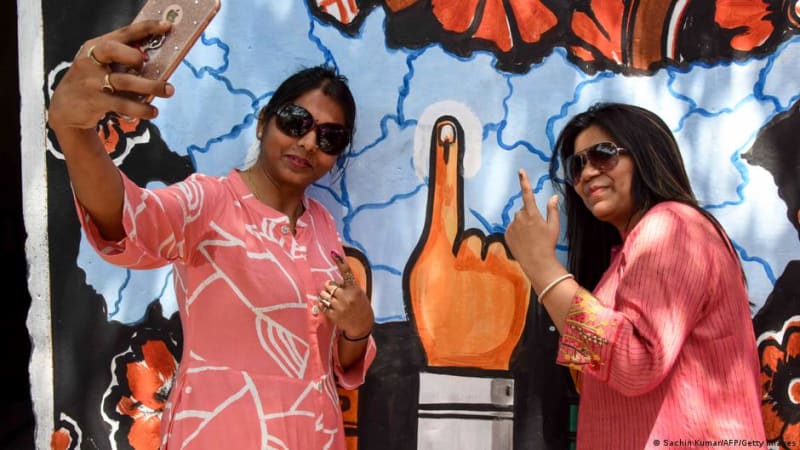
Inside India's Gen Z: Silence, Social Media, and the Search for Political Identity
A revealing look inside India's Gen Z political landscape shows a generation caught between digital activism and systemic disillusionment. Their nuanced perspectives challenge traditional notions of political engagement.
In a cozy South Delhi coffee shop, five young professionals gathered to unpack a complex question: What does political engagement really look like for India's largest youth generation? Their conversation revealed a nuanced landscape of digital activism, personal anxiety, and cautious hope.
With 377 million Indians between ages 23-24 belonging to Generation Z, this demographic represents more than just a statistical milestone - they are potentially the most pivotal voting bloc in the world's largest democracy. The group, comprising Saurabh, Advik, Yashaswini, Yasir, and Harshita, embodied the spectrum of political perspectives: from ardent followers to strategic disengagers.
Each participant brought a unique lens to political participation. Yasir, a law student, identified as left-leaning, while Yashaswini described herself as a right-liberal. Saurabh, an educator and civil services aspirant, positioned himself as a centrist. Harshita, working in social media marketing, considered herself apolitical - and Advik, a finance professional, was contemplating leaving India entirely as a form of political statement.
Social media emerged as their primary political information source, but with remarkable caution. Despite being digital natives, they unanimously agreed to self-censor political content online. Advik articulated a telling observation: online discussions often devolve into hostile exchanges, leading many to disengage. 'Just because you are anonymous, where is your humanity?' he pointedly asked.
A striking moment came when Harshita shared an anecdote about a local protest against stray dog removal in New Delhi. While online recruitment drew scores of potential participants, only four or five ultimately showed up. 'They rally online,' she noted, 'but when it comes to finishing something they have started, the enthusiasm fizzles out.' This observation encapsulated a broader generational pattern of digital performativity versus physical action.
Underlying their conversations was a profound mistrust of mainstream media. Yashaswini supplemented her news consumption by consulting government sources like the Press Information Bureau, demonstrating a sophisticated approach to information gathering. Advik was particularly critical, arguing that much online political content functions as propaganda, with young people often falling into simplistic narratives like 'if not Modi, then who?'
Perhaps most revealing was the group's shared sense of political vulnerability. Advik's statement that 'India is turning into a surveillance state' resonated with an underlying current of generational anxiety. Harshita's nihilistic view that expecting political change is 'delusional' suggested a deeper emotional response to systemic challenges.
As India approaches critical electoral moments, this generation's complex relationship with political engagement will be pivotal. Their digital savvy, measured skepticism, and desire for meaningful change suggest not apathy, but a thoughtful recalibration of what political participation means in a rapidly transforming democracy.
Based on reporting by DW News
This story was written by BrightWire based on verified news reports.
Spread the positivity! 🌟
Share this good news with someone who needs it