Innovative Tidal Power Project Could Fuel UK's AI Revolution and Boost Somerset Economy
An innovative tidal power project could revolutionize UK's energy landscape, powering AI's growing electricity demands while creating a multi-functional coastal landmark. The £11bn proposal promises sustainable electricity generation and significant economic benefits for Somerset.
A groundbreaking renewable energy proposal could transform the Somerset coastline into a sustainable powerhouse, combining cutting-edge technology with environmental innovation. London Eye architect Julia Barfield is spearheading an ambitious £11bn project to create a 14-mile tidal power station that promises to address the UK's growing electricity demands while offering multiple community benefits.
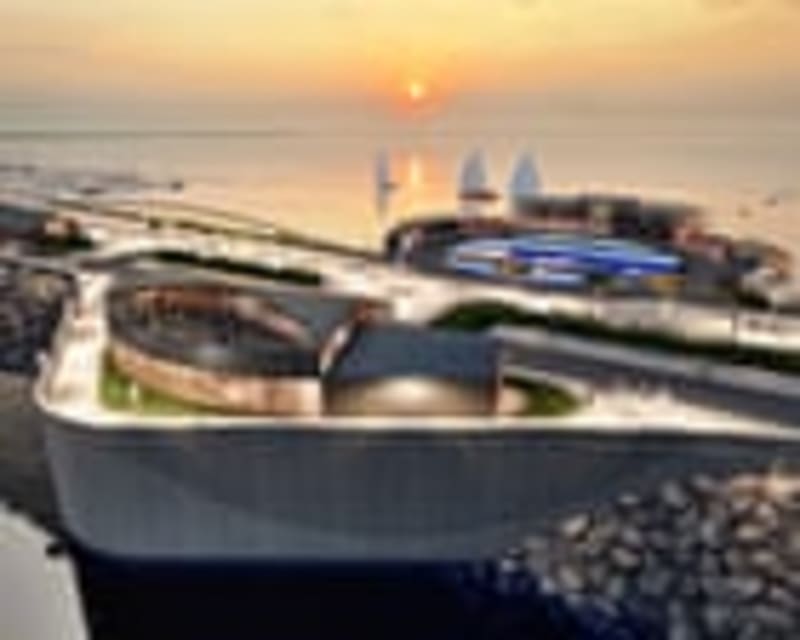
The proposed West Somerset Lagoon would harness the Bristol Channel's extraordinary tidal range using 125 underwater turbines, potentially generating 2.5GW of electricity - enough to power 2 million homes. This visionary project comes at a critical moment as the United Kingdom grapples with surging energy requirements driven by the rapidly expanding artificial intelligence sector, which is expected to dramatically increase national electricity consumption.
Barfield and her consortium see the project as more than just an energy solution. The semi-circular barrage would include a cyclist and pedestrian pathway, water-sports marina, lido, and observation tower, transforming what could be a purely functional infrastructure project into a landmark destination. Local MP Rachel Gilmour has enthusiastically endorsed the proposal, describing the pathway as potentially 'absolutely iconic'.
The project's potential extends beyond power generation. Designers have proposed innovative additional features, including potential datacentre installations that could benefit from seawater cooling, oyster and mussel beds, floating solar panel arrays, and a coastal amphitheatre designed to revitalize Minehead, currently one of Britain's most economically challenged areas. These features could provide significant economic stimulus to a region that has struggled with deprivation.
Technologically, the tidal power station offers compelling advantages over other renewable energy sources. Tidal power is more predictable than wind or solar energy, with the project's backers believing it could generate electricity for an impressive 120 years - potentially making it more cost-effective than nuclear alternatives. The timing is particularly crucial, with Britain's national energy system operator predicting datacentre electricity demand will treble by 2035.
The project's leaders are acutely aware that government support will be critical. 'We have people who want to fund this, but they will only do so if the government is supportive,' explained Aidan Clegg, the consortium's chief executive. The Department for Energy Security and Net Zero has indicated openness to well-developed tidal range energy proposals that demonstrate strong economic value.
As the UK navigates the complex challenges of the AI revolution and climate change, the West Somerset Lagoon represents an innovative approach to sustainable infrastructure. By combining renewable energy generation, technological innovation, and community development, the project offers a glimpse of how infrastructure can simultaneously address environmental, economic, and technological challenges.
Based on reporting by Guardian Environment
This story was written by BrightWire based on verified news reports.
More Good News
 🌍 Planet
Innovative Solar Solution: ZOUPW 450W Portable Panel Revolutionizes Off-Grid Power Generation
 🌍 Planet
Conservation or Displacement? The Complex Story of Tanzania's Game Reserves
 🌍 Planet
Electric Vehicle Giants BYD and Tesla Dominate Global Battery Electric Vehicle Market
Start Your Day With Good News
Join 50,000+ readers who wake up to stories that inspire. Delivered fresh every morning.
No spam, ever. Unsubscribe anytime.