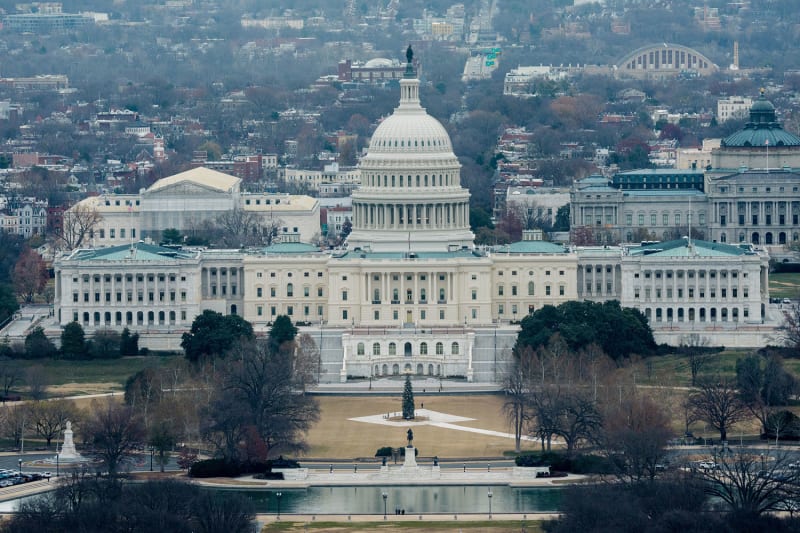
How Congress Reshaped America's Future: 4 Key Developments in 2025
In a landmark year, the Republican-led Congress dramatically transformed national policy during Trump's second term, making historic tax cuts permanent and reshaping federal regulations. These sweeping changes promise to impact virtually every aspect of American economic and social life.
In a year marked by decisive political action, the Republican-controlled Congress dramatically transformed national policy during President Donald Trump's second term, implementing sweeping changes that could impact every American household.
The legislative body's most significant achievement came on July 4th, when Trump signed what he called a "big, beautiful bill" making the 2017 tax cuts permanent. This landmark legislation not only extended tax reductions but introduced innovative provisions like tax deductions for tipped workers, seniors, and even created tax-advantaged "Trump Accounts" for newborns.
The Congressional Budget Office projected the law would slash taxes by $4.5 trillion over the next decade. While Democrats argued that the benefits disproportionately favored high-income earners, the bill represented a major victory for Republican policy objectives. The legislation also included substantial spending increases, notably a $150 billion Pentagon infusion that - combined with the annual National Defense Authorization Act - pushed military spending over $1 trillion for the first time in history.
Immigration enforcement received a significant boost with over $170 billion allocated to support ICE operations, including funding for increased agent hiring and expanded deportation capabilities. However, the bill was not without controversy, as Democrats strongly criticized $1 trillion in Medicaid cuts and reductions in clean energy funding previously enacted under the Biden administration.
Congressional Republicans also leveraged the Congressional Review Act aggressively, repealing a record 22 federal regulations across sectors including consumer protection, education, energy, and cybersecurity. This unprecedented use of the 1996 law - more repeals than in the entire previous history of the act - was facilitated by the GOP's 53-member Senate majority, which could bypass traditional filibuster restrictions.
The Senate further consolidated Republican power by modifying procedural rules. In September, they implemented an "en bloc" confirmation process for presidential nominations, allowing 48 executive nominees to be confirmed in a single vote. Before year's end, an additional 97 nominees had been approved, significantly reshaping the federal bureaucratic landscape.
Despite these transformative actions, Republican leadership maintained the 60-vote threshold for most legislation, resisting President Trump's calls to completely eliminate the filibuster. The year concluded with a tumultuous 43-day government shutdown, underscoring the challenges of governance with a narrow congressional majority and deep partisan divisions.
As 2025 drew to a close, it was clear that the Republican Congress had fundamentally reshaped national policy, with consequences that would reverberate through American society for years to come.
Based on reporting by NBC News
This story was written by BrightWire based on verified news reports.
More Good News
 💡 Solutions
Historic Victory: First Black Woman Elected to Iowa State Senate Blocks GOP Supermajority
 💡 Solutions
Taiwan Remains Vigilant as China Concludes Major Military Exercises
 💡 Solutions