Hidden Ocean Heroes: How Mid-Sized Fish Connect Marine Ecosystems
Scientists discover how mid-sized fish serve as crucial links between deep and shallow ocean ecosystems. The groundbreaking research reveals the hidden connections that sustain marine life in the ocean's mysterious twilight zone.
Deep beneath the ocean's surface lies a mysterious realm known as the twilight zone, a dimly lit world teeming with unexpected connections and scientific revelations. Researchers from Woods Hole Oceanographic Institution (WHOI) have uncovered groundbreaking insights into how mid-sized fish play a crucial role in marine food webs, bridging the gap between surface and deep-sea ecosystems.
Scientists have long wondered about the complex interactions within the mesopelagic zone, a layer stretching from 200 to 1,000 meters beneath the ocean's surface. This region contains more living biomass than any other ocean zone, but until now, researchers struggled to understand how larger predators like sharks interact with the smaller organisms inhabiting these depths.
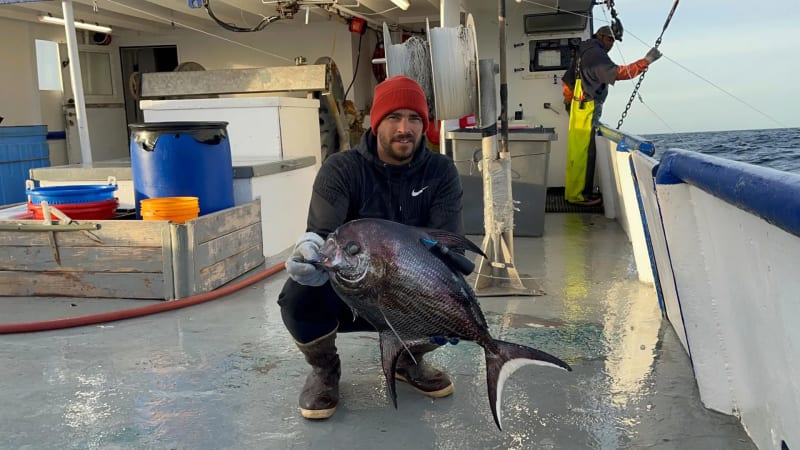
In a groundbreaking study published in Marine Ecology Progress Series, lead researcher Martin Arostegui and his team used satellite-based tracking tags to reveal the remarkable behavior of bigscale pomfret. These mid-sized fish emerge as unexpected heroes, serving as a critical link between deep and shallow ocean environments. The research demonstrates that these fish follow a fascinating daily migration pattern, remaining deep during daylight hours and moving to shallower waters to feed at night.
The study's innovative approach involved collaboration with commercial fishers, including Captain Danny Mears, who helped tag these elusive creatures. Mears and his crew were particularly excited about contributing to scientific understanding. 'Bigscale pomfret are so different from the tunas and swordfish we usually catch that we are fascinated by them whenever they show up in our gear,' Mears explained, highlighting the unique nature of this research.
Environmental conditions emerged as a significant factor in the fishes' behavior. When bigscale pomfret traveled from the Slope Sea to the clearer waters of the Sargasso Sea, researchers observed notable changes in their migration patterns. These variations suggest that water clarity dramatically influences fish movement, affecting their hunting strategies and predator interactions.
WHOI biologist Camrin Braun, the study's senior author, emphasized the critical importance of these overlooked species. 'We always talk about the mesopelagic layer like it's this giant buffet for big predators -- but we've been skipping over the species in the middle,' Braun noted. 'These mesopelagic fish are doing the hard work of connecting the deep ocean to the surface food web. If we don't understand them, we're basically trying to solve a puzzle with the middle pieces missing.'
The research represents a significant breakthrough in understanding marine ecosystems, revealing the intricate connections that sustain ocean life. By tracking these mid-sized predators, scientists have uncovered a hidden world of marine interactions that was previously invisible to researchers, highlighting the complexity and interdependence of ocean life.
Based on reporting by Science Daily
This story was written by BrightWire based on verified news reports.
More Good News
 🚀 Innovation
Electrifying Deal: Dodge Charger EV Slashes Prices by Nearly 50%
 🚀 Innovation
CATL's Sodium-Ion Battery Revolution: A Breakthrough in Electric Vehicle Technology
 🚀 Innovation
Home Tech Revolution: 5 Breakthrough Innovations That Are Changing Everyday Living
Start Your Day With Good News
Join 50,000+ readers who wake up to stories that inspire. Delivered fresh every morning.
No spam, ever. Unsubscribe anytime.