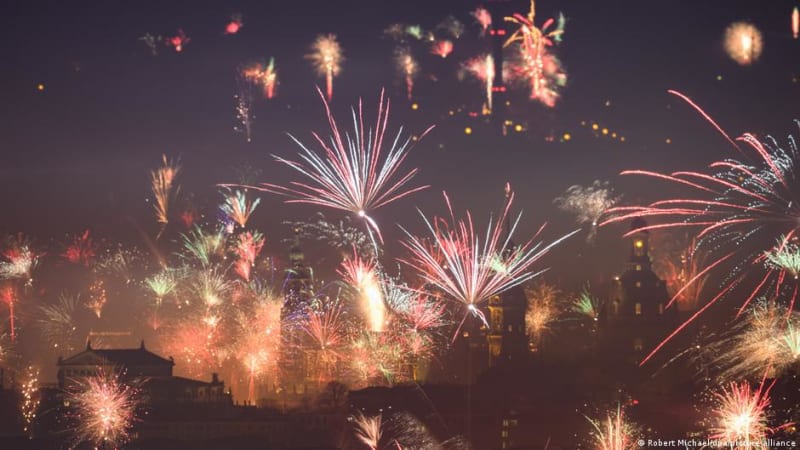
Germans Debate Future of New Year's Eve Fireworks Amid Safety Concerns
A deep dive into Germany's evolving New Year's Eve fireworks tradition reveals growing safety concerns and changing public attitudes. Nearly half of Germans now support potential restrictions on private pyrotechnics.
As the winter chill descends on Germany, crowds of enthusiastic revelers are once again lining up outside supermarkets, eagerly anticipating the three-day window for purchasing New Year's Eve fireworks. In Thuringia, a recent scene captured the nation's festive spirit when a group of young men, armed with hot tea and blankets, waited patiently to be the first customers when stores opened on December 29.
The German fireworks market is booming, with the Pyrotechnic Industry Association reporting a record €197 million in sales for 2024 - a significant increase from €180 million the previous year. Despite this commercial success, a surprising trend is emerging: only 22% of Germans actually want to set off their own fireworks, according to a representative survey by opinion research institute Civey.
The tradition remains most popular among younger people and families, who are drawn to colorful and exciting products with dramatic names like 'Giftzwerg' (Poison Dwarf) and 'Hurricane Force'. However, growing safety concerns are casting a shadow over this beloved New Year's Eve ritual. The Federal Environment Agency has highlighted that fireworks generate over 2,000 metric tons of fine particulates, representing approximately 1% of Germany's annual particulate pollution.
Safety experts are particularly alarmed by increasing injuries and illegal fireworks. German customs officials seized more than seven tons of unauthorized pyrotechnics in 2024 - more than the previous three years combined. Jochen Kopelke from the federal German Police Union warns that people are constantly seeking more powerful explosives, creating significant risks.
The international landscape is changing, with neighboring countries like Czechia and the Netherlands taking strong stances. Czechia has already banned fireworks in large areas, while the Netherlands plans a complete prohibition of private fireworks starting in 2026. These developments reflect growing concerns about safety, environmental impact, and the potential misuse of pyrotechnics.
Tragically, the dangers are very real. In 2024, two young men died handling spherical bombs containing over 600 grams of black powder, with one doctor describing the aftermath as a devastating scene. The rise of illegal fireworks from Poland, Czechia, and the Netherlands - some comparable to military explosives - has further heightened public anxiety.
As the debate intensifies, nearly half of all Germans are now considering a complete ban on private fireworks. The tension between long-standing tradition and emerging safety concerns creates a complex social dialogue, challenging communities to balance festive joy with responsible celebration.
Based on reporting by DW News
This story was written by BrightWire based on verified news reports.
More Good News
 💡 Solutions
Historic Victory: First Black Woman Elected to Iowa State Senate Blocks GOP Supermajority
 💡 Solutions
Taiwan Remains Vigilant as China Concludes Major Military Exercises
 💡 Solutions