From the Brink of Extinction: How Australian Scientists Rescued a Rare Snail Species
Australian scientists have successfully bred and reintroduced the critically endangered Campbell's keeled glass-snail, transforming its status from extinct to a growing population. This groundbreaking conservation effort offers hope for endangered species worldwide.
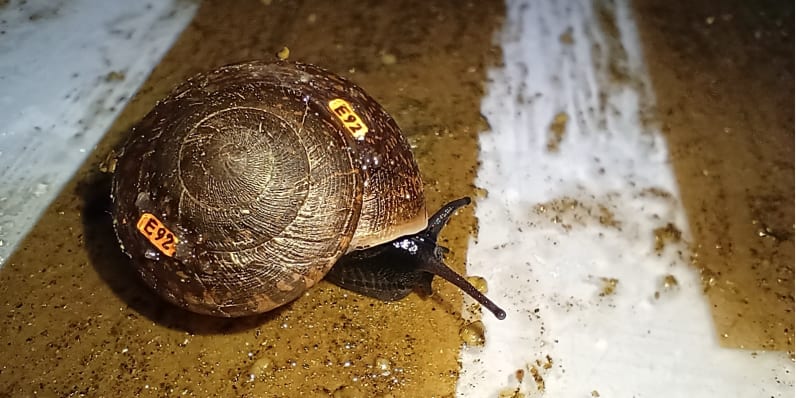
In a remarkable conservation success story, researchers have transformed the fate of Campbell's keeled glass-snail from a presumed extinct species to a slowly rebounding population on Norfolk Island. What was once thought lost forever has now become a beacon of hope for endangered wildlife preservation.
Scientists from the Australian Museum, led by researcher Isabel Hyman, made a groundbreaking discovery in 2020 when they confirmed a small wild population of these rare snails surviving in a sheltered rainforest valley within Norfolk Island National Park. This unexpected finding sparked an ambitious collaborative breeding and reintroduction program involving Taronga Zoo, Western Sydney University, and the national park authorities.
The team faced significant challenges, knowing almost nothing about the snail's life history, dietary needs, or behavioral patterns. Through meticulous research and careful husbandry, they gradually built a captive breeding program that has since grown from a handful of individuals to over 800 snails. In June, they transported approximately 600 snails to Norfolk Island, strategically releasing 340 marked individuals into a carefully prepared section of the national park.
The reintroduction site was selected with extraordinary precision. Researchers installed rodent traps and monitoring cameras, and even implemented a sprinkler system to protect the snails during potentially dangerous dry periods. Critically, the release location was intentionally separate from the original wild population, designed to mitigate extinction risks by establishing a second population zone.
Since the release, early signs are promising. The team has already observed newborn snails, indicating potential reproductive success in the new habitat. While acknowledging that establishing a stable population takes time, Hyman expressed cautious optimism about the project's initial results, noting minimal evidence of rodent predation.
The conservation effort doesn't stop here. The team plans another reintroduction in June 2026 to further bolster the new population's chances of long-term survival. Though the Campbell's keeled glass-snail remains officially listed as extinct by the IUCN Red List, this project represents a powerful example of how dedicated scientific intervention can potentially reverse a species' seemingly hopeless trajectory.
This extraordinary journey from presumed extinction to potential recovery highlights the incredible potential of focused, collaborative conservation efforts. By combining scientific expertise, patience, and a deep commitment to biodiversity, researchers have given this tiny snail a second chance at survival.
Based on reporting by Mongabay
This story was written by BrightWire based on verified news reports.
More Good News
 🌍 Planet
Duke Energy Florida Slashes Electricity Bills by 22%, Credits Solar Innovations
 🌍 Planet
Electric Vehicle Market Shifts: Unprecedented Deals Await Buyers This Year-End
 🌍 Planet
T1 Energy Acquires Massive 5-Gigawatt Solar Module Factory from Trina Solar, Marking New Era in US Clean Energy Manufacturing
Start Your Day With Good News
Join 50,000+ readers who wake up to stories that inspire. Delivered fresh every morning.
No spam, ever. Unsubscribe anytime.